The Next Frontier in Sheet-Metal Optimization
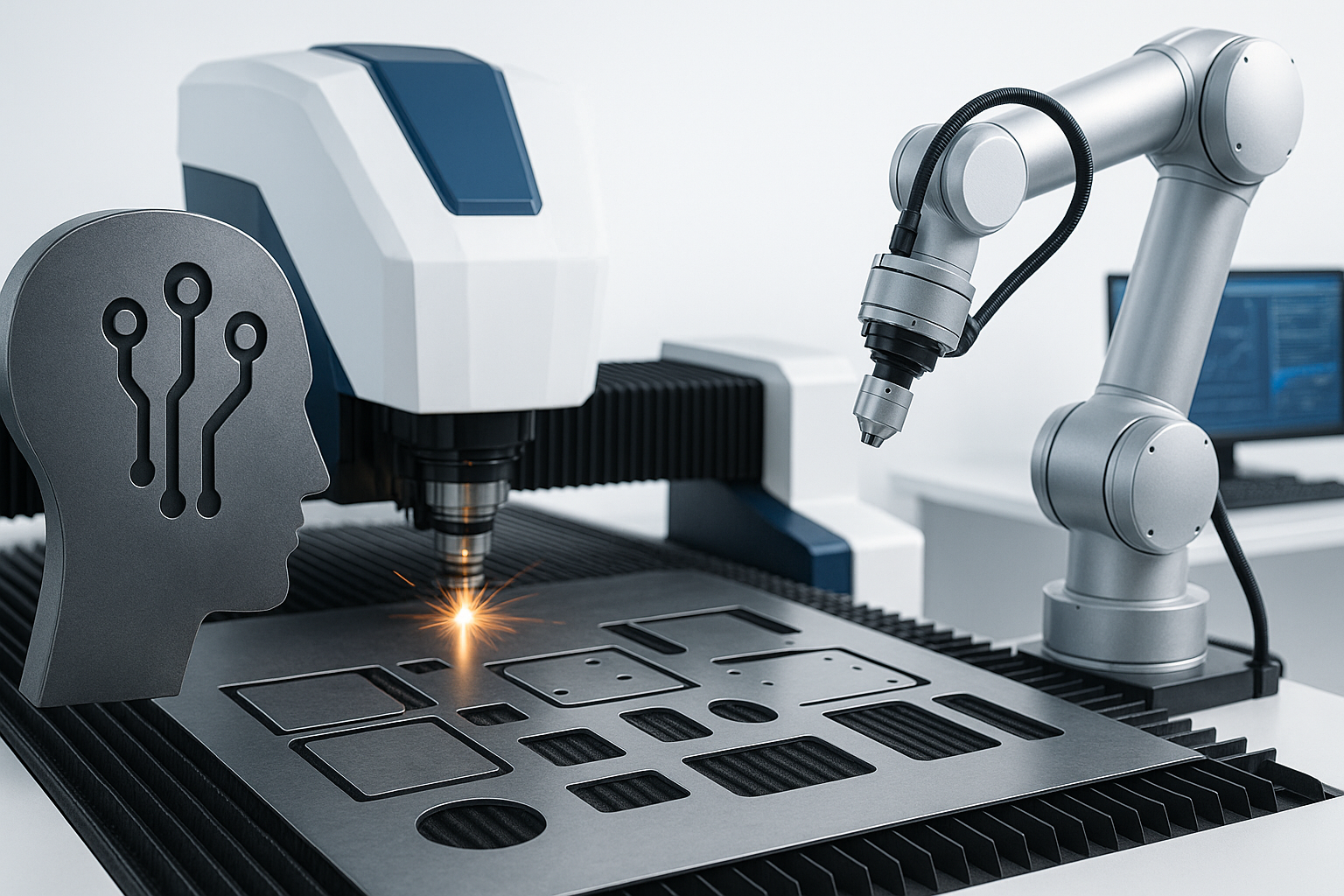
In today’s manufacturing landscape, every square centimeter of sheet metal counts. Traditional nesting software has long optimized part placement to reduce waste, but AI sheet metal nesting is now redefining what “optimized” really means. By combining machine learning, real-time data, and predictive algorithms, manufacturers can now balance material utilization, production speed, and carbon reduction in a single process – something that was nearly impossible just a few years ago.
How AI Learns to Nest Smarter
Unlike fixed-rule nesting systems, AI-driven solutions learn continuously from production feedback. They don’t just compute how to fit shapes efficiently – they analyze how different patterns affect tool wear, cutting paths, and even energy usage. Over time, the AI refines its strategy, improving yield and minimizing offcuts.
Early adopters report up to 10–15% higher material utilization and measurable reductions in CO₂ emissions by minimizing re-runs and optimizing sheet layouts based on the carbon intensity of different materials.
From Algorithms to Action: Connected Factories
The real advantage of AI nesting emerges when it’s linked to the wider digital factory. Integration with MES and ERP systems means that every nesting decision reflects live data – from available inventory to delivery deadlines. When combined with automated laser cutting, bending, and sorting systems, AI nesting becomes part of a fully adaptive production loop.
This “closed feedback” model is already being demonstrated by several innovators preparing for Blechexpo 2025, where smart nesting and digital fabrication will take center stage in the push for sustainable, autonomous metalworking.
Reducing Scrap – and Carbon Footprint
Material waste has always been both a financial and environmental concern. Every kilogram of scrap metal represents not just lost profit, but embodied carbon from extraction, transport, and processing. By reducing offcuts and optimizing batch scheduling, AI nesting directly contributes to Scope 3 emissions reduction – a metric increasingly scrutinized by industrial customers and regulators alike.
Many systems now provide carbon impact dashboards, allowing operators to visualize how each nesting run affects sustainability KPIs. For OEMs, this offers a tangible way to meet corporate carbon targets while improving profitability.
Why It Matters for Sheet-Metal Manufacturers
For fabricators balancing rising energy costs, sustainability goals, and global competition, AI sheet metal nesting isn’t a luxury – it’s becoming a competitive necessity. The technology’s ability to cut material waste, shorten lead times, and align with ESG commitments makes it one of the most actionable applications of AI in manufacturing today.
As more companies adopt digital production workflows, the winners will be those who see nesting not as a static step, but as a strategic optimization process that evolves with every production run.
For more insights and updates, explore our Sheet Metal hub – covering the latest innovations in AI, automation, and digital fabrication.


2 Comments