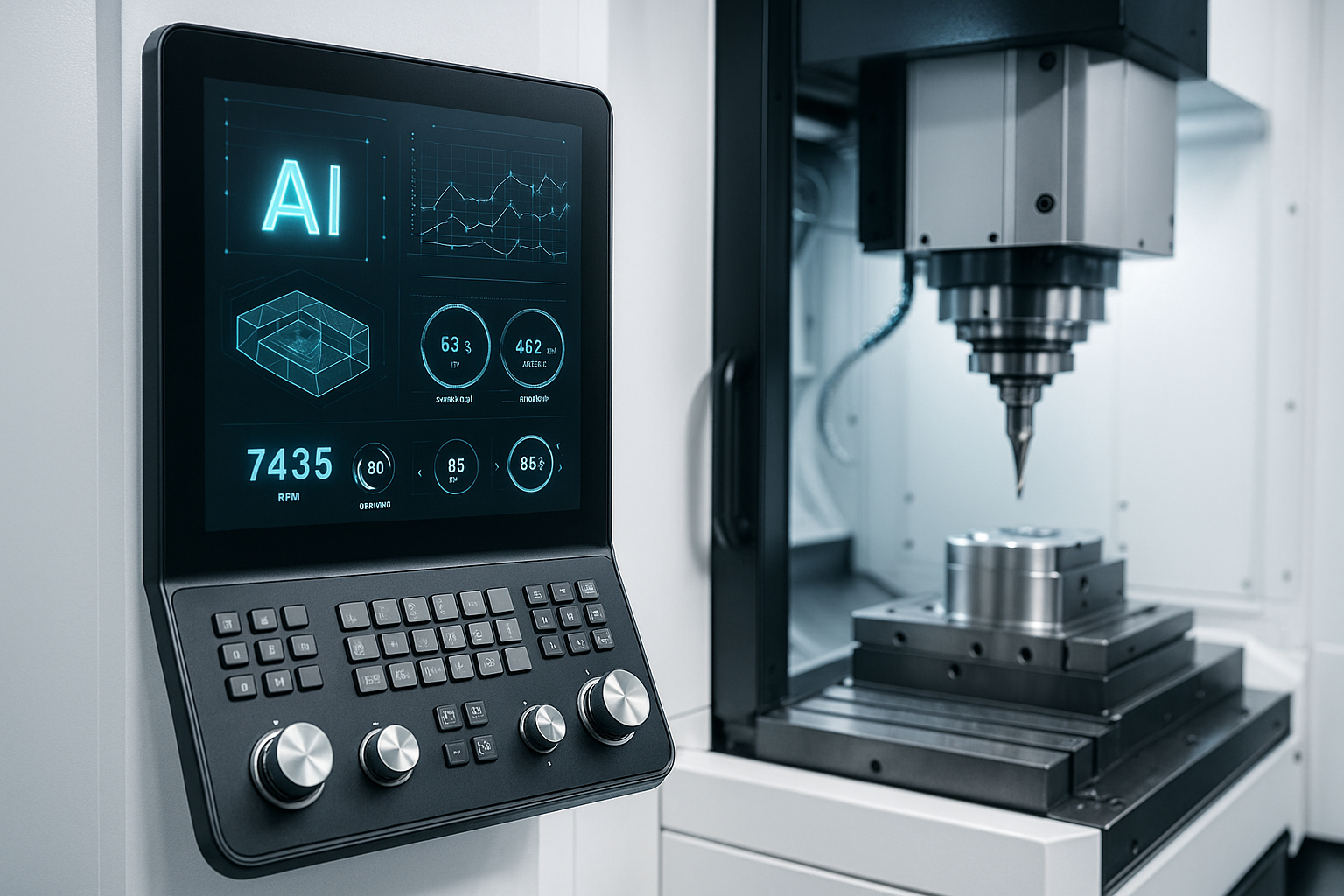
These new AI-powered CNC controls are redefining how European shops manage machining accuracy and cycle times. European machine shops are seeing a wave of new AI-powered CNC controls designed to optimise cycle time, improve tool life, and automate decisions that previously relied on experienced programmers. Over the last month, several new software releases and controller updates have pushed the industry closer to a future where machining strategies are continuously adjusted by algorithms instead of manual settings.
This article breaks down the most important updates, what they actually change on the shop floor, and why adoption is accelerating right now across Europe’s CNC machining sector.
Why AI-Powered CNC Controls Are Gaining Traction
Factories are under simultaneous pressure to deliver higher accuracy, adapt to short-run mixes, and improve machine uptime. Traditional CNC controls are powerful, but they rely heavily on manual intervention, tribal knowledge, and conservative parameters.
According to analysis from Engineering.com (https://www.engineering.com), AI is rapidly changing control strategies by reducing manual tuning and increasing decision-making autonomy.
AI-powered CNC controls solve these problems by analysing live spindle signals, axis loads, vibration patterns, and part geometry. Instead of reacting after a problem occurs, the system anticipates the issues – and adjusts before errors appear.
The biggest advantages shops are seeing include:
- Better automatic feed and speed optimisation
- More stable machining of difficult alloys
- Reduced chatter and deflection
- Improved repeatability across different operators
- Real-time tool wear adjustment during the cut
This Month’s Key AI CNC Control Updates
A series of software improvements have rolled out across Europe in the last few weeks, and they share three common goals: faster cycle times, better intelligence, and more autonomy on the machine.
1. Real-Time Adaptive Machining Enhancements
Across several OEM control platforms, new adaptive machining models are improving how machines respond to chatter, heat build-up, and sudden load changes.
Research published by Modern Machine Shop (https://www.mmsonline.com) highlights how real-time inference models are creating more stable machining conditions at higher cutting speeds.
The systems now run more granular inference, allowing high-speed finishing without instability.
2. Smarter Tool Wear Prediction Models
New wear models are making AI-based tool monitoring far more accurate. Rather than using fixed intervals, the control now adjusts based on real spindle harmonics and vibration signatures. This is reducing tool breakage in small-batch and prototype jobs.
3. Automated Parameter Adjustment for HMLV Shops
High-mix, low-volume shops have historically struggled with automation because every job is different. New inference models automatically adjust cutting parameters for each program, even if it’s the first time the part has ever been machined.
4. Better Data Pipelines Between CAM and CNC
Several updates are improving how CAM data flows into the control. Automatic interpretation of part features now reduces the manual setup steps that used to cause errors or rework.
What This Means on the Shop Floor
These updates have real, measurable effects for European machining operations:
- Cycle time reductions of 8–15% on complex parts
- Fewer scrapped components during pilot runs
- Higher throughput with the same workforce
- More consistent results across shifts and operators
- Less operator fatigue due to fewer manual overrides
For many shops, the biggest gain is stability. AI-powered CNC controls reduce the number of times operators need to “save” a part from chatter, thermal drift, or unexpected material variation.
How These Updates Fit Into the Bigger AI CNC Landscape
This month’s releases show a clear movement toward more autonomous machining. AI-powered CNC controls now work alongside CAM systems, sensing systems, and inspection cameras to create a continuous digital pipeline.
For further context, explore related topics on MachineToolNews.ai:
- Internal Link → AI in CNC
- Internal Link → CAM Assist 2.0: Bringing Clarity, Control, and Confidence to AI-Driven CAM
Each of these updates strengthens the connection between planning, machining, and inspection, reducing variation and enabling more consistent output.
The Road Ahead: Toward Fully Autonomous CNC Cells
As AI-powered CNC controllers continue to evolve, the next milestones include:
- Fully autonomous parameter tuning
- Continuous toolpath optimisation
- Real-time corrections based on in-cut monitoring
- Deeper integration with AI inspection systems
- Machine-level autonomy for small-batch work
In the next few years, many shops will shift from manual optimisation to AI-led machining strategies, driven by the pressure to maximise accuracy and minimise downtime.
MachineToolNews.ai on LinkedIn


4 Comments
I’m extremely inspired together with your writing talents and
also with the format for your blog. Is that this a paid subject matter or did you customize it your self?
Either way stay up the nice quality writing, it is uncommon to see a nice weblog like this one today..
Thank you very much it’s always nice to receive positive feedback 🙂