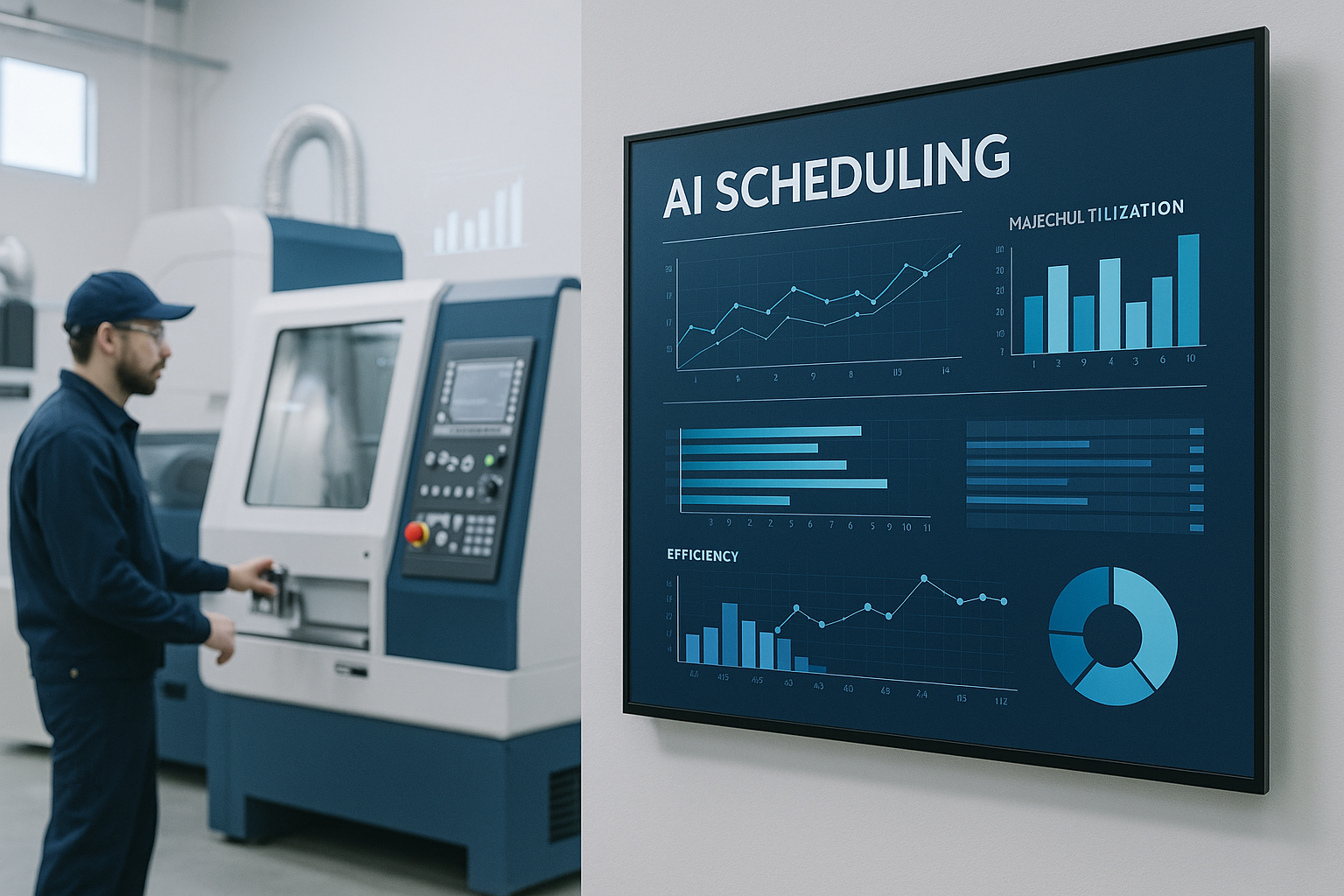
As labour shortages continue to challenge the manufacturing sector, Dutch factories are increasingly turning to AI scheduling systems to optimise their operations. These advanced technologies not only streamline production processes but also enhance workforce management, allowing manufacturers to tackle the pressing issue of insufficient skilled workers. For more context on how AI is being adopted across European workshops, see our AI in Manufacturing Weekly Updates.
Key takeaways
- Dutch factories are implementing AI scheduling systems to mitigate labour shortages.
- AI technologies enhance operational efficiency and productivity.
- Real-time data analysis allows for better resource allocation.
- Successful case studies highlight the effectiveness of AI in manufacturing.
- Potential ROI for AI systems is projected for 2025.
What this means for manufacturers
The adoption of AI scheduling systems signifies a transformative shift in the manufacturing landscape. By leveraging AI, manufacturers can automate scheduling processes, reduce downtime, and optimise workforce utilisation. This is particularly crucial in the context of labour shortages, where the demand for skilled workers often exceeds supply. AI can assist in predicting production needs and adjusting schedules accordingly, ensuring that facilities operate at peak efficiency. Shops already moving to predictive planning can also explore our AI in CNC insights which explain how factories stabilise production under labour constraints.
Real world examples from shops or OEMs
Several Dutch manufacturers have successfully integrated AI scheduling systems into their operations. For instance, a leading automotive component manufacturer implemented an AI-driven scheduling tool that analyses historical production data and current workforce availability. This system enabled the company to reduce lead times by 20% and significantly improve on-time delivery rates. Another example includes a sheet metal fabrication shop that utilised AI to optimise its production schedules, resulting in a 30% increase in throughput.
Implementation and ROI for 2025
Looking towards 2025, the implementation of AI scheduling systems is expected to yield substantial returns on investment (ROI). Manufacturers can anticipate cost savings through enhanced productivity and reduced labour costs. The initial investment in AI technology may be offset by the gains in efficiency and output. Industry experts suggest that facilities adopting AI scheduling will see an ROI within two to three years, making it a viable long-term strategy for addressing labour shortages. Industry reports referenced by Modern Machine Shop highlight similar ROI timelines for AI deployment in staffing and scheduling
Common pitfalls and how to avoid them
While the benefits of AI scheduling systems are clear, manufacturers must be aware of common pitfalls during implementation. One major challenge is data quality; inaccurate or incomplete data can lead to suboptimal scheduling decisions. To avoid this, manufacturers should invest in robust data management practices. Additionally, resistance to change among staff can hinder successful adoption. Engaging employees through training and demonstrating the advantages of AI systems can facilitate a smoother transition.
FAQ
What are AI scheduling systems?
AI scheduling systems use artificial intelligence to automate and optimise production schedules, taking into account various factors such as workforce availability and machine capacity.
How can AI scheduling systems help with labour shortages?
These systems enhance operational efficiency, allowing manufacturers to make better use of their existing workforce and reduce the impact of labour shortages.
What is the expected ROI for AI scheduling systems?
Manufacturers can expect an ROI within two to three years after implementing AI scheduling systems, primarily through increased efficiency and reduced costs.
What challenges might manufacturers face when implementing AI?
Common challenges include data quality issues and employee resistance to change. Addressing these early on can facilitate a smoother implementation process.
Conclusion
The integration of AI scheduling systems in Dutch factories represents a proactive approach to combat labour shortages while enhancing productivity. As the manufacturing sector continues to evolve, embracing AI technologies will be crucial for maintaining competitiveness and operational efficiency.
For more insights on AI in manufacturing, visit our Linkedln.



One Comment