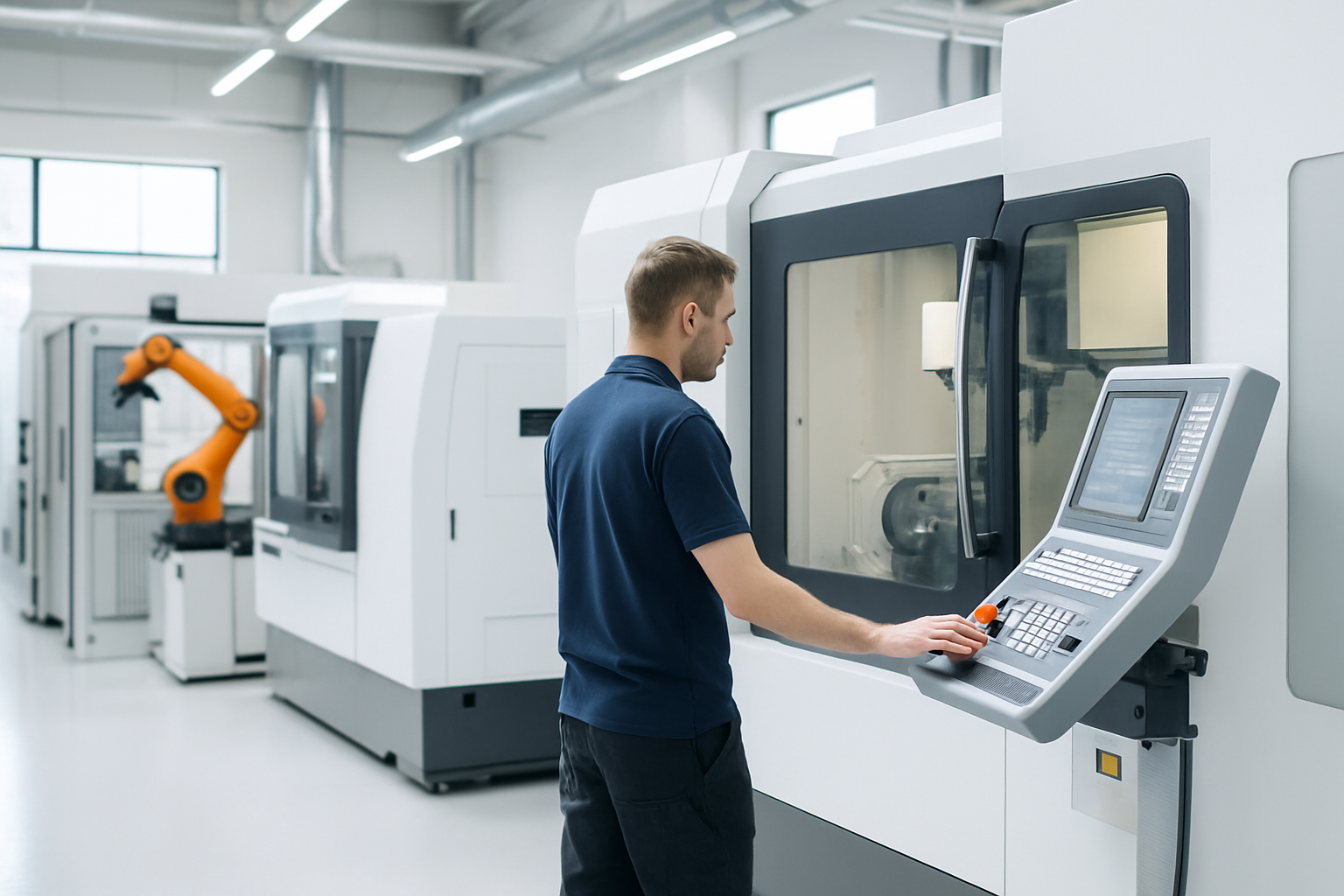
AI in German manufacturing is no longer an emerging trend. In 2025, it has become a clear divider between factories that are quietly accelerating and those that are losing ground without fully realising it. The difference is not access to technology. German industry has no shortage of AI tools, automation suppliers, or system integrators. The gap is created by how decisions are made, how skills are developed, and how AI is positioned inside day-to-day production.
This divide mirrors a broader pattern we see across Europe in AI adoption in machine tools, where execution matters far more than ambition.
AI in German manufacturing is already mature enough to create winners
Germany occupies a unique position in global manufacturing. CNC machining, sheet metal, automotive, and high-precision industrial equipment form the backbone of its export economy. AI adoption therefore does not start from zero. It builds on decades of automation, PLC control, and data-rich production environments.
What has changed over the past two years is not awareness, but execution. AI is now embedded in real workflows such as toolpath optimisation, adaptive machining, predictive maintenance, quality inspection, scheduling, and energy optimisation.
According to research published by Germany’s leading manufacturing bodies, AI is increasingly viewed as a competitiveness requirement rather than an optional upgrade.
Factories that are pulling ahead treat AI as production infrastructure. Factories that stall treat it as a side project.
The first separator is leadership intent, not technology
In factories that are moving ahead, leadership has already answered one uncomfortable question clearly: why AI matters to their business this year.
These companies define AI in operational terms. Reduced scrap. Shorter setup times. Higher spindle utilisation. Faster quoting. Fewer unplanned stoppages. AI initiatives are scoped against one or two measurable outcomes and deployed directly where friction exists.
This difference is increasingly visible in initiatives such as the Siemens AI Data Alliance, where factories with clear operational intent extract far more value than those participating without defined production goals.
In slower moving factories, AI remains abstract. Strategy decks exist. Pilot projects run parallel to production. Responsibility is unclear. AI is discussed in meetings but rarely anchored to a specific machine, cell, or shift.
Two factories with similar machines can therefore experience completely different outcomes.
Skills strategy determines whether AI creates leverage or friction
Germany’s skills challenge is well known, but its impact on AI adoption is often underestimated.
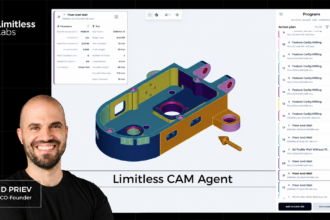
Factories that pull ahead design AI systems around their current workforce rather than an ideal future workforce. They prioritise AI that supports operators, programmers, and planners. Common examples include AI-assisted CAM programming, adaptive parameter selection, operator guidance systems, and visual inspection support.
We see a similar skills-first approach emerging in AI in CNC machining, where AI reduces cognitive load rather than increasing it.
This aligns closely with findings from the Fraunhofer Institute, which repeatedly identifies skills availability as a critical constraint on industrial AI deployment.
Factories that stall often invest in AI systems that require new data science expertise, complex configuration, or constant external consultancy. Over time, this increases resistance rather than adoption.
Data ownership and machine integration are decisive factors
Factories that are pulling ahead have already done the hard work of data integration. They know where their data lives, who owns it, and how it moves between machines, software, and planning systems.
This enables practical use cases such as adaptive machining based on real cutting conditions, quality prediction using historical deviations, and scheduling optimisation tied to live machine states.
By contrast, factories that stall often face fragmented data landscapes. Mixed machine generations. Proprietary interfaces. Unclear data rights.
In 2025, data readiness matters more than algorithm sophistication.
AI in German manufacturing succeeds when ROI is visible early
Factories that gain momentum with AI deliberately target early wins. They focus on use cases that deliver value within weeks or months, not years. Reducing scrap on a critical process. Stabilising cycle times. Cutting manual programming effort.
This ROI-first mindset explains why AI in sheet metal automation is often adopted faster than more complex robotic systems.
Early wins build internal trust. Operators see benefits. Management sees numbers. AI becomes part of normal improvement discussions.
Factories that stall often chase broad transformations. End-to-end AI platforms. Fully autonomous cells. Large-scale digital twins. These initiatives carry long timelines and unclear ownership. When results take too long, attention moves elsewhere.
The difference is not ambition. It is sequencing.
Supplier relationships influence outcomes more than software features
German factories that pull ahead work closely with suppliers who understand production reality. They prioritise integration quality, long-term support, and roadmap clarity over marketing claims.
Factories that struggle often select AI solutions based on corporate alignment or headline features rather than operational fit. These systems look impressive in presentations but fail under real shop-floor conditions.
In practice, the most successful AI deployments in Germany are often modest in appearance but deeply embedded in daily work.
Why the gap will widen through 2025
The gap between AI leaders and laggards in German manufacturing is now self-reinforcing.
Factories that succeed early generate better data, stronger internal skills, and higher confidence. This allows them to deploy the next AI use case faster and with less friction.
Factories that stall accumulate technical debt, skills gaps, and scepticism. Each delayed or underperforming project makes the next one harder to justify.
According to market outlooks from firms such as McKinsey, early AI adopters in manufacturing are already compounding productivity advantages year after year.
By the end of 2025, this divide will show up clearly in delivery reliability, cost structure, and export competitiveness.
What German manufacturers should focus on now
For factories looking to regain momentum, the path forward is clearer than it appears:
- Tie AI projects to one production problem that matters today
- Design AI around existing teams, not hypothetical skills
- Prioritise data integration before model complexity
- Choose suppliers who understand machines, not slides
- Aim for visible results within one quarter
FAQ: AI in German Manufacturing
What does AI in German manufacturing actually mean in 2025?
AI in German manufacturing refers to the use of artificial intelligence directly inside production environments such as CNC machining, sheet metal processing, automation cells, quality inspection, and factory planning. In 2025, AI in German manufacturing is focused less on experimentation and more on measurable improvements like productivity, quality consistency, and faster decision making on the shop floor.
Why are some German factories more successful with AI than others?
Factories that succeed with AI in German manufacturing focus on practical use cases tied to real production problems. These factories integrate AI into existing workflows, support current operators and programmers, and prioritise fast ROI. Factories that struggle often treat AI as a standalone innovation project rather than part of daily manufacturing operations.
Which AI applications deliver the fastest ROI in German manufacturing?
The fastest returns from AI in German manufacturing typically come from AI assisted CAM programming, predictive maintenance, adaptive machining, automated quality inspection, and production scheduling optimisation. These applications work directly with existing machines and data, making them easier to scale across German factories.
Is AI in German manufacturing only relevant for large companies?
No. AI in German manufacturing is often most effective in mid sized factories, where targeted AI deployments can quickly improve efficiency without large scale digital transformation projects. Many German SMEs adopt AI incrementally, focusing on one process or machine group at a time.
How important is data readiness for AI in German manufacturing?
Data readiness is critical. Successful AI in German manufacturing depends on access to reliable machine data, clear data ownership, and integration between machines and software systems. Factories that address data integration early are far more likely to scale AI beyond pilot projects.
Will AI adoption in German manufacturing continue to accelerate after 2025?
Yes. As early adopters gain skills, cleaner data, and confidence, AI in German manufacturing is expected to accelerate further after 2025. The performance gap between factories using AI effectively and those delaying adoption is likely to widen over the next few years.