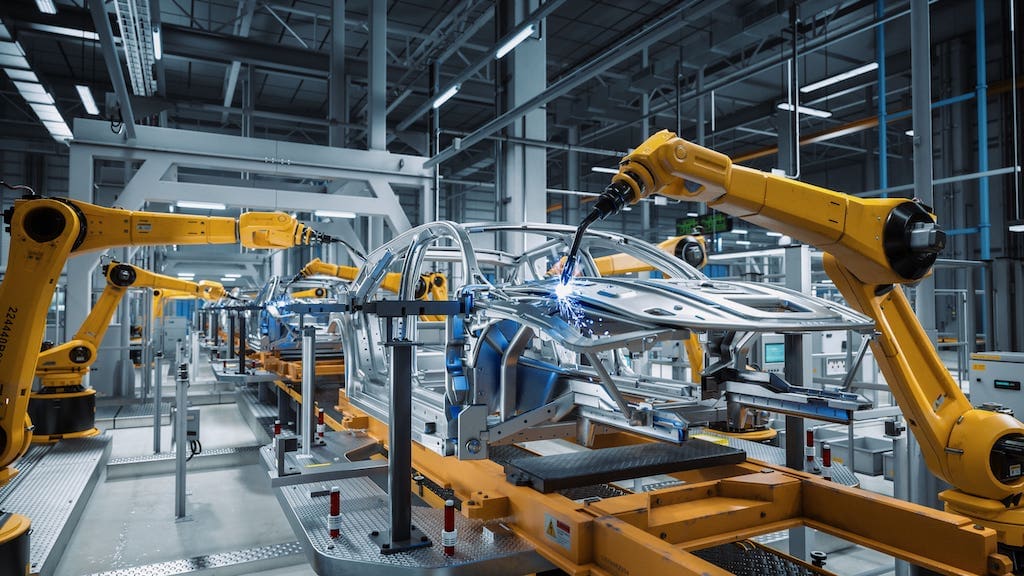
Edge AI in Manufacturing 2026 is becoming one of the most important developments in industrial technology, as factories shift toward real-time, machine-level intelligence. Many manufacturers are already using artificial intelligence, yet fewer understand where that intelligence is actually processed and why it matters.
Edge AI refers to running AI models directly on machines, devices, or local systems on the factory floor rather than relying on cloud-based processing. This shift is changing how quickly factories can respond, how securely they can operate, and how scalable AI deployments can become.
As manufacturers push for faster decisions, lower latency, and greater control over data, Edge AI is moving from an emerging concept to a practical requirement.
Edge AI in Manufacturing 2026 is enabling real-time decision making directly on machines.
What Is Edge AI in Manufacturing?
Edge AI in manufacturing is the deployment of artificial intelligence algorithms directly on physical equipment such as CNC machines, robots, vision systems, or industrial PCs.
Instead of sending data to the cloud for analysis, the data is processed locally at the “edge” of the network, right where the machine is operating.
This means:
- Decisions happen in real time
- Data does not need to leave the factory
- Systems can operate even without internet connectivity
Typical edge AI systems combine sensors, embedded processors, and machine learning models that are trained either locally or in the cloud and then deployed on-site. The adoption of Edge AI in Manufacturing 2026 is being driven by speed and data volume challenges.
Edge AI is already being deployed at scale, with platforms like NVIDIA’s industrial edge computing solutions enabling real-time AI processing directly on factory equipment. IBM also explains how edge computing supports real-time decision making in industrial environments
How Edge AI Is Used in Factories
Edge AI is already being applied across multiple areas of manufacturing. The most common use cases are focused on speed, accuracy, and operational efficiency. Many factories are combining cloud systems with Edge AI in Manufacturing 2026 for hybrid deployments.
Real-Time Quality Inspection
Machine vision systems powered by Edge AI can detect defects instantly during production. Instead of waiting for batch inspection, manufacturers can identify issues as they happen.
This reduces scrap, improves consistency, and enables immediate corrective action.
Predictive Maintenance on Machines
Edge AI models can analyse vibration, temperature, and spindle data directly on a machine to detect early signs of failure.
Because the processing happens locally, alerts are generated instantly without needing to send large datasets to external servers.
Adaptive Machining and Process Control
Advanced systems can adjust feeds, speeds, or toolpaths in real time based on live data.
This allows machines to respond to material variation, tool wear, or unexpected conditions without operator intervention.
Autonomous Robotics
Robots equipped with Edge AI can make decisions based on what they see and sense in their environment.
This is especially important for applications such as bin picking, assembly, and flexible automation where conditions change constantly.
Edge AI vs Cloud AI in Manufacturing
Both approaches are used in modern factories, but they serve different purposes.
Edge AI:
- Ultra-low latency
- Real-time decision making
- Greater data privacy
- Works without internet
Cloud AI:
- More computational power
- Centralised data analysis
- Easier model training and updates
- Better for long-term optimisation
In practice, most manufacturers are moving toward a hybrid model where training happens in the cloud and execution happens at the edge.
These challenges are driving demand for more user-friendly platforms and pre-built industrial AI solutions. Edge AI in Manufacturing 2026 is rapidly becoming a standard approach for factories looking to improve real-time performance and reduce reliance on cloud-based systems.
Why Edge AI Matters Now
Several factors are accelerating the adoption of Edge AI in manufacturing:
Speed Requirements
Modern production lines cannot afford delays. Even milliseconds can impact throughput and quality.
Data Volume
Machines generate huge amounts of data. Sending all of it to the cloud is expensive and inefficient.
Cybersecurity Concerns
Keeping sensitive production data on-site reduces exposure to external risks.
Scalability
Edge deployments allow manufacturers to roll out AI across multiple machines without overloading central systems.
Challenges of Edge AI Adoption
Despite the benefits, there are still barriers to widespread adoption:
- Limited processing power on edge devices compared to cloud systems
- Complexity in deploying and maintaining AI models across many machines
- Integration with legacy equipment
- Skills gap in AI and industrial data science
MTN Analysis
Edge AI is not replacing cloud AI. It is redefining where value is created.
The shift toward edge-based intelligence reflects a deeper change in manufacturing. AI is moving closer to the machine, closer to the process, and closer to real-time decision making.
Security is another reason why Edge AI in Manufacturing 2026 is gaining attention.
Vendors that can combine strong cloud training environments with seamless edge deployment are likely to lead the market. This includes machine tool builders, software providers, and industrial automation companies that understand both data and production.
For manufacturers, the opportunity is clear. The real gains will come from applying AI directly at the point of production where decisions actually impact performance.
The future of Edge AI in Manufacturing 2026 will depend on easier deployment and integration.
For a broader understanding of how AI is transforming factory environments, see our guide on what industrial AI means for manufacturing.
Key Takeaways
- Edge AI processes data directly on machines rather than in the cloud
- It enables real-time decision making with minimal latency
- Key applications include inspection, maintenance, machining, and robotics
- Most factories will adopt a hybrid edge and cloud AI approach
- Adoption is growing due to speed, security, and scalability demands
FAQ
What is Edge AI in manufacturing in simple terms?
Edge AI means running artificial intelligence directly on factory machines or devices so they can make decisions instantly without relying on the cloud.
Is Edge AI better than cloud AI?
Neither is better on its own. Edge AI is ideal for real-time decisions, while cloud AI is better for large-scale analysis and training.
Where is Edge AI used in factories?
It is commonly used in quality inspection, predictive maintenance, robotics, and adaptive machining.
Do manufacturers need new machines for Edge AI?
Not always. Many solutions can be added to existing machines using sensors, industrial PCs, or retrofitted systems.
Edge AI in Manufacturing 2026 is expected to play a central role in how next-generation factories operate and scale intelligent automation.






2 Comments