AI at GrindingHub 2026 is putting smart grinding, automation, and sensor-based process control at the centre of precision manufacturing.
GrindingHub 2026, taking place in Stuttgart from May 5–8, will place artificial intelligence, automation, and data-driven grinding firmly in the spotlight. Modern grinding machines are rapidly evolving into intelligent manufacturing systems, using AI models, sensor technology, and closed-loop process control to deliver higher productivity, greater flexibility, and stable precision.
From unmanned closed-loop manufacturing and automated compensation to AI-supported process monitoring and grinding for humanoid robot components, GrindingHub 2026 will showcase how grinding technology is becoming a core pillar of intelligent production.
AI at GrindingHub 2026: Smart Grinding Moves Into the Production Core
“With intelligent automation 4.0, we have long since heralded the change,” says Marie-Sophie Maier, Managing Director of Adelbert Haas GmbH. “Intelligent, fully automated complete manufacturing has overtaken traditional complete machining. Today, extremely high productivity and flexibility are essential, as is zero compromise on precision.”
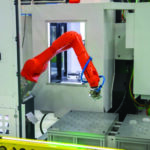
At Adelbert Haas, fully automated closed-loop manufacturing is already standard practice. Grinding, measuring, and re-grinding processes run continuously in unmanned operation across 21 shifts per week, ensuring consistent quality and efficiency.
Service strategies are also changing through AI. “Service is not a reaction, but prevention,” Maier explains. “AI agents analyze machine data in real time, detect anomalies, and initiate measures before a shutdown threatens: automatic ticket creation, prioritization of critical alarms, log files at the touch of a button. Rule-based programming is a thing of the past. Today, we learn from data and act proactively.”
GrindingHub 2026 will provide the platform to discuss how automation and AI are transforming grinding technologies and how these systems will shape future production environments.
For visitors, AI at GrindingHub 2026 provides a practical view of how predictive service, anomaly detection, and closed-loop manufacturing are already being applied in real production environments.
Digital Production Control and Automated Compensation
At GrindingHub, Anca Europe GmbH will focus on automation and production control alongside new products for stream finishing and microtool manufacturing.
“We will be focusing on automation and production control,” says Martin Winterstein, Managing Director of Anca Europe GmbH. “The goal is to help users manufacture competitively under their given conditions through high quality, low manufacturing costs, and creative solutions.”
Anca will present a server-based digital production control system that combines app-based worker guidance with automated measurement and compensation. The system organizes workflows across machines and pallets, issuing step-by-step digital work instructions that eliminate manual data entry, reduce errors, and improve traceability.
Closed measurement loops and automatic compensation ensure parts remain within tolerance without operator intervention. All process data is stored centrally, allowing full traceability and enabling skilled workers to supervise more machines simultaneously. The result is faster training, reduced waste, and more predictable production shifts.
Grinding for the Age of Humanoid Robotics
Grinding precision is also becoming critical for emerging applications such as humanoid robotics. Transmission elements for joints and drives require extremely high dimensional accuracy and surface quality to ensure smooth movement and low noise levels.
“Our grinding machines guarantee high dimensional and geometrical accuracy, process reliability, and flexibility with high output,” says Jan Schmid, Head of Engineering & Project Planning at Erwin Junker Maschinenfabrik GmbH. “Thanks to our many years of experience in thread grinding, we are able to offer customized grinding solutions for all types of threads.”
Junker offers specialized grinding solutions using ceramic and electroplated CBN grinding wheels and grinding pins. Internal thread grinding allows threads to be machined directly from solid material, including cone threads, ball threads, and special profiles. Even internal thread diameters below 10 mm can be produced reliably.
“When grinding threaded spindles, even threads with high pitch angles can be produced thanks to the flexible machine concept,” Schmid explains. “For maximum flexibility, we offer solutions for single-tooth machining and multi-tooth machining for particularly high output.”
Sensors and AI for Stable Precision Processes
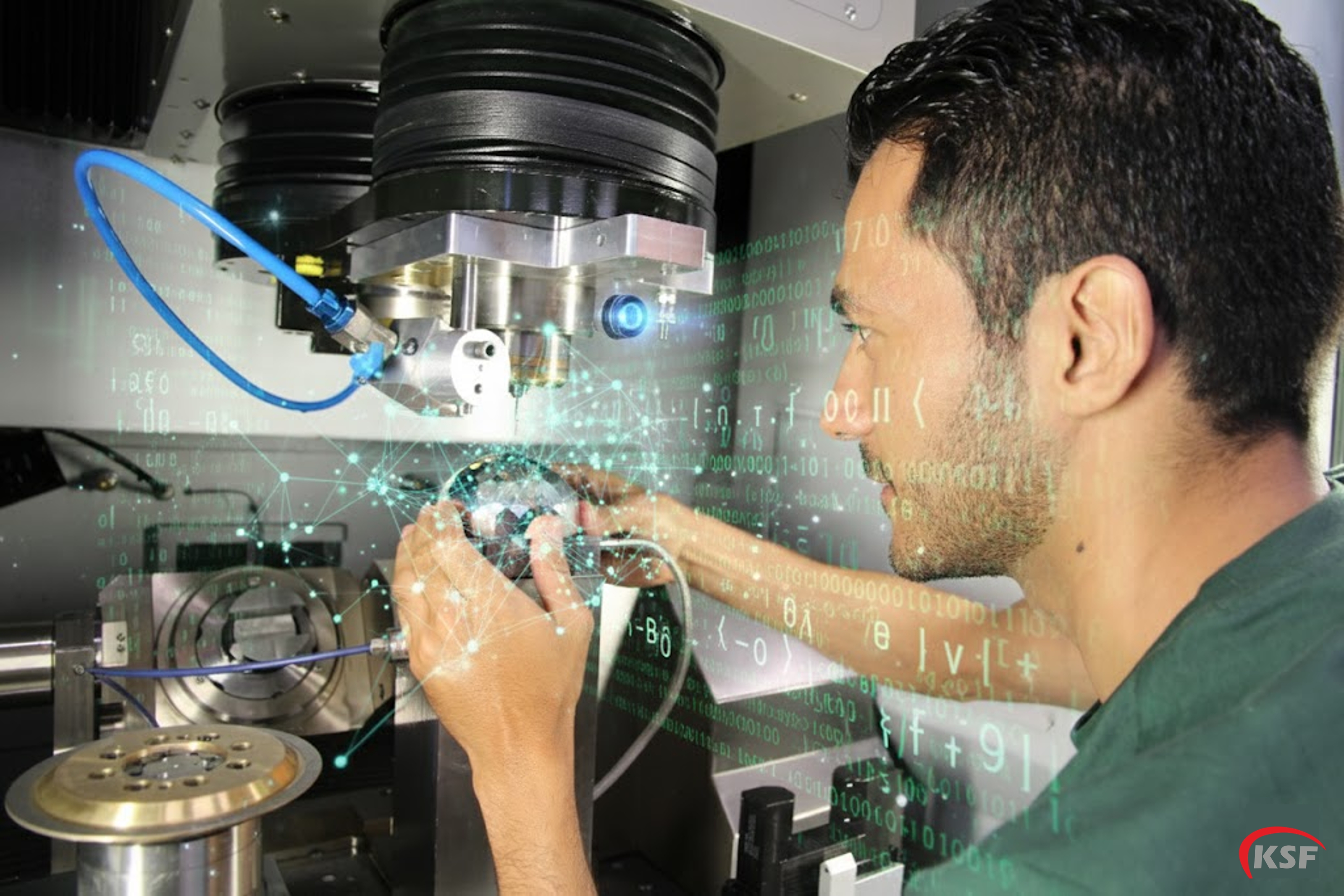
According to Prof. Bahman Azarhoushang, Head of the KSF Institute at Furtwangen University, grinding is moving toward fully integrated, AI-supported control loops.
“Modern machine tools combine classic NC and path controls with real-time sensor monitoring, integrated in-situ measurement technology, and increasingly also with additional measuring cells directly next to the machine,” he explains.
Force sensors, vibration sensors, and spindle monitoring systems continuously generate process data. AI models use this data to predict grinding wheel wear, detect unstable process conditions through anomaly detection, and forecast component quality. Cutting parameters such as feed rate, cutting speed, and infeed can then be automatically optimized.
This data also forms a long-term process knowledge database, helping manufacturers retain expertise despite the shortage of skilled workers.
“Modern intelligent grinding machines integrate particularly dynamic drives, high-resolution measuring chains, and adaptive control algorithms that continuously analyze and autonomously optimize the grinding process,” Azarhoushang says. “The combination of sensor technology, integrated measurement technology, and AI-supported process control enables more sustainable, economical, and more consistent quality precision machining.”
He adds that the major challenge lies in fully integrating these technologies into existing production environments. “The future competitiveness of industrial manufacturing locations depends largely on how consistently grinding processes are digitized, automated, and operated in closed control loops. Intelligent machine tools and artificial intelligence will play a key role in this.”
The technologies presented under the banner of AI at GrindingHub 2026 highlight how sensor data and machine learning are being combined to stabilise precision processes.
Grinding Reimagined Through AI
GrindingHub 2026 will demonstrate how automation, end-to-end digitalization, and AI-supported control loops are transforming grinding from a traditional machining process into a self-optimizing manufacturing system. Fully automated closed-loop processes enable high productivity, flexibility, and stable quality, even under demanding conditions.
Sensors, intelligent production control, and data-based service strategies are shifting the industry focus from reactive maintenance to predictive prevention. GrindingHub 2026 will show how these technologies are defining the long-term competitiveness of precision manufacturing.
GrindingHub 2026 joins a growing list of industrial events now using live demonstrations to show how AI is being deployed directly on production equipment.
AI at GrindingHub 2026 positions grinding as a key discipline in the wider shift toward intelligent, self-optimising manufacturing systems.