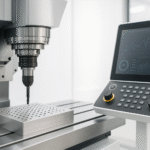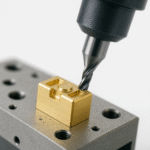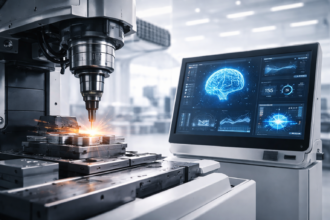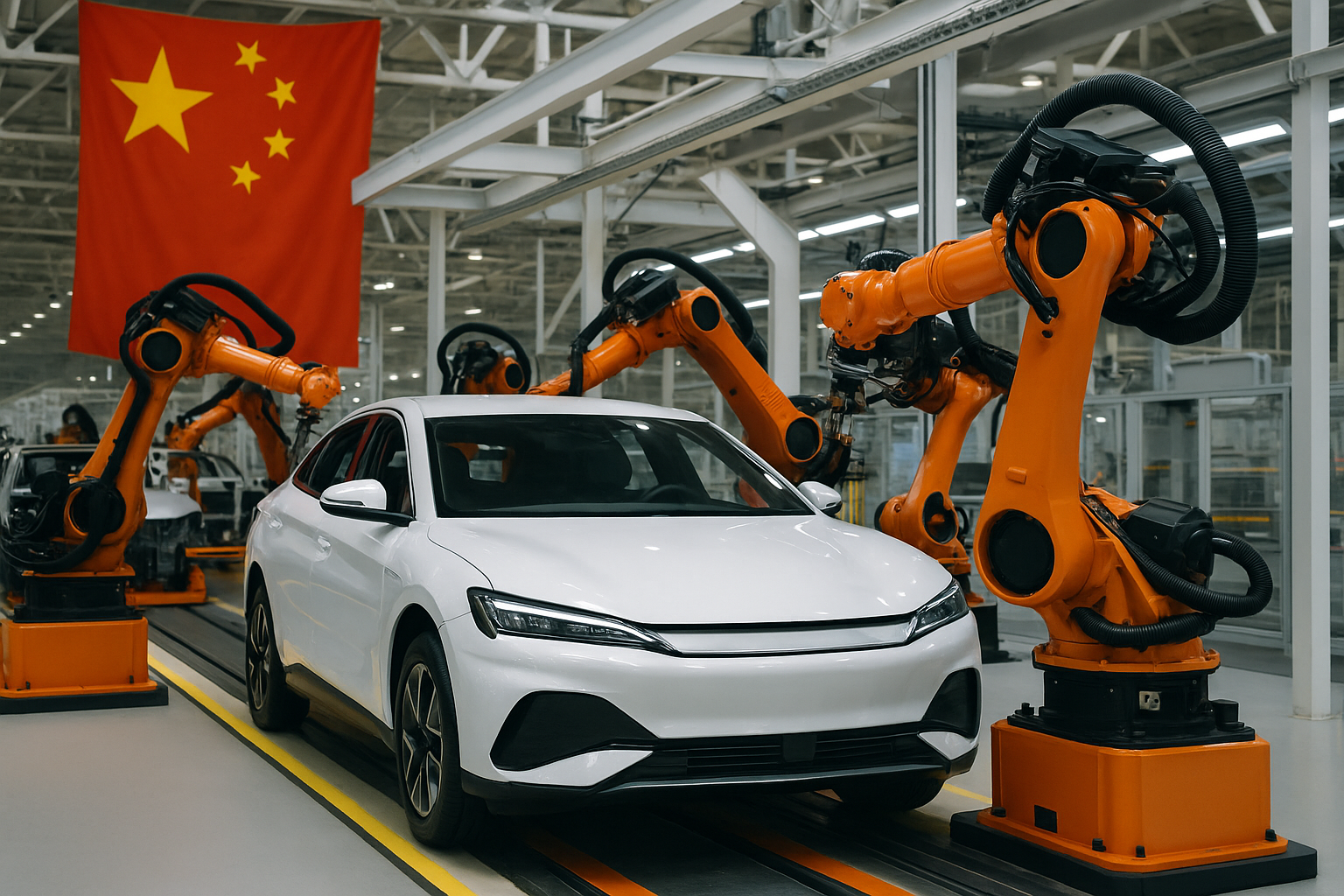
China’s leading EV makers have transformed vehicle plants into software-defined, sensor-rich “AI car factories,” combining robotics, computer vision, digital twins, and real-time optimization. Beyond the hype, these plants are delivering measurable gains in throughput, quality, and cost. The key question now is not if this model works – but where and how fast it will spread beyond China.
What makes China’s “AI car factories” different?
- Automation + AI at scale. Chinese EV plants deploy robots, AGVs, and in-line AI inspection to reduce manual intervention.
- Vision and in-line analytics. Advanced machine vision systems catch micro-defects early in assembly, improving yield.
- Software-defined production. Factories are often planned via digital twins before physical buildout; manufacturing execution systems (MES), data pipelines, and vehicle software feed into one continuous feedback loop.
These traits have allowed newer Chinese EV makers to leapfrog legacy manufacturers by building with full integration of AI, automation, and data orchestration from day one.
Why China pulled ahead
- Greenfield advantage. Many of China’s EV entrants built factories from scratch, embedding advanced automation and modular processes rather than retrofitting old ones.
- Policy support. Industrial strategy, subsidies, and regional clustering aligned manufacturers and suppliers around smart manufacturing.
- Software-hardware feedback loop. Vehicle software, autonomy stacks, and factory operations are treated as an integrated system, enabling fast iteration and tuning.
Are these AI factories coming to the West?
Europe: Yes – already underway
At IAA Mobility in September 2025, Stella Li, BYD’s Executive Vice President, told Reuters:
“We are training ourselves to be more European in production … Give us like two to three years.” – Stella Li, Reuters, Sept. 2025 (reuters.com)
BYD is building a plant in Hungary (startup by end-2025) and another in Turkey (2026) to support this shift. (reuters.com)
Alfredo Altavilla, BYD’s European adviser, added:
“It does not make sense to invest in car assembly (in Europe) but bring batteries from China.” – Altavilla, Reuters, Sept. 2025 (reuters.com)
Moreover, European expansion is gaining steam: BYD plans for all Europe-destined EVs to be produced locally by 2028. (reuters.com) Spain is also emerging as a frontrunner for BYD’s third European plant. (reuters.com)
Self-driving push via Europe: Chinese autonomous driving firms are focusing on Europe because the U.S. market remains blocked. Reuters reports:
“Blocked from the U.S. market, Chinese self-driving technology firms are accelerating their push into Europe …” – Reuters, Oct. 6, 2025 (reuters.com)
United States: Highly constrained
In October 2025, Donald Trump declared massive new tariffs and export control plans:
“Starting November 1st … the United States of America will impose a Tariff of 100% on China, over and above any tariff that they are currently paying.” – Donald Trump via Truth Social, Reuters, Oct. 10, 2025 (reuters.com)
He also announced new export controls on U.S. critical software. (Reuters) The heightened stance makes Chinese factory deployment in the U.S. a very high-risk strategy.
Representative quotes (2025)
- “We are training ourselves to be more European in production … Give us like two to three years.” – Stella Li, Reuters, Sept. 2025
- “It does not make sense to invest in car assembly (in Europe) but bring batteries from China.” – Alfredo Altavilla, Reuters, Sept. 2025
- “Starting November 1st … the United States of America will impose a Tariff of 100% on China, over and above any tariff that they are currently paying.” – Donald Trump, Reuters, Oct. 2025
What to watch next (12–24 months)
- Execution of BYD’s European plants and whether a Spain facility is confirmed.
- European regulation on foreign investment, IP protection, and data controls.
- Whether Trump follows through on the 100% tariff and software controls.
- Acceleration of AI car factories upgrades among European and U.S. OEMs.
- Localization of battery, semiconductor, sensor, and rare earth supply to support AI factories.
Takeaway (2025 perspective)
China’s EV makers have built a powerful AI factory model-robotics, digital twins, data orchestration-and now aim to export it. Europe is already seeing early signs via BYD’s localization and self-driving initiatives. The U.S., however, presents steep barriers: massive tariffs and software export controls make Chinese factory entry extremely challenging. The more likely path is for Western automakers to adopt the AI factory methods internally, while Chinese firms expand in more hospitable regions.