Artificial intelligence may dominate boardroom discussions and media headlines, but for manufacturers and engineers, the reality is more complex. A new industry report titled “AI Reality Check: The True Impact of AI in Manufacturing and Engineering”, launched by Advanced Engineering UK, explores where AI is genuinely delivering results – and where the barriers to wider adoption still lie.
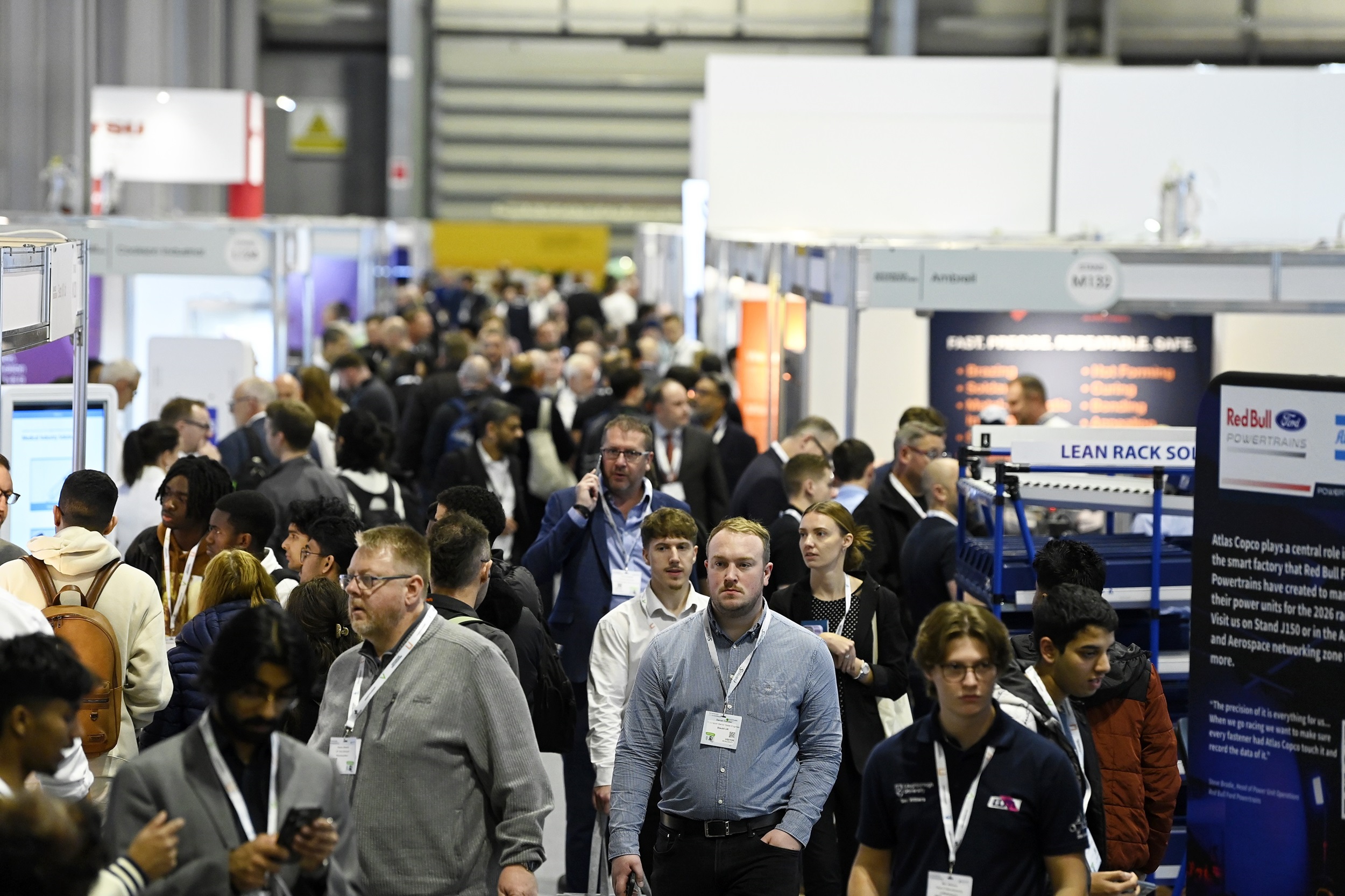
The report, authored by leading figures from Atlas Copco, GTMA, Innovation DB, Made Smarter, The Manufacturing Technology Centre (MTC), Prospecthire, and the University of Sheffield’s AMRC, will be officially presented at the Advanced Engineering Show 2025 (29–30 October, NEC Birmingham). It offers a timely, data-driven snapshot of AI’s true role in the sector – cutting through hype to focus on measurable outcomes.
Beyond the Buzzword
As Simon Farnfield, Event Director at Easyfairs, notes, “AI isn’t a buzzword anymore – it’s here and it’s changing how things get made. But adoption remains uneven, skills gaps are widening, and many companies still don’t understand how to move from pilots to scalable impact.”
The report identifies significant progress in predictive maintenance, quality inspection, and energy efficiency, where AI tools are already generating measurable gains. Yet it cautions that without the right skills, leadership buy-in, and cultural readiness, these benefits risk remaining isolated rather than transformative.
Industry Leaders Share What’s Really Working
- Gerald Law, CEO of Innovation DB, emphasizes that AI success stories are emerging fastest among startups and innovation-driven SMEs that integrate AI early into their R&D and investment strategies. He notes that companies embracing collaboration between investors, data scientists, and engineers are moving from concept to production-ready applications far quicker than legacy-heavy manufacturers.
- Dr. Nandini Chakravorti CEng MIET, Director of the Digital Engineering Group at MTC, highlights how UK supply chains are already reaping efficiency gains from digital twins and data-driven maintenance models. However, she warns that the skills gap – particularly around data interpretation and system integration – remains a bottleneck. Stronger partnerships between academia, apprenticeships, and industry are critical to maintaining momentum.
- James McAllister, General Manager of Atlas Copco Tools & Industrial Assembly Solutions, focuses on practical AI in the workshop. His message: the technology’s greatest impact so far has been in real-time quality monitoring and assembly optimization, where data-driven tools allow engineers to fine-tune performance, reduce downtime, and increase consistency. Still, he stresses that AI should be seen as a collaborative tool – augmenting human expertise, not replacing it.
Skills, Ethics, and the Road Ahead
A recurring theme across the report is the shortage of AI-capable talent. Manufacturers are competing not only with each other but also with finance and tech sectors for skilled data scientists and machine-learning engineers. Contributors urge the industry to embed coding and data literacy earlier in education, while also reskilling the existing workforce to ensure long-term competitiveness.
The report also addresses ethical, regulatory, and environmental challenges, calling on businesses to treat AI as a strategic tool requiring human oversight – not a “plug-and-play” fix. Transparency, explainability, and sustainability should guide deployment as the sector scales up its digital transformation.
Join the Live Discussion
The findings will be explored further during a live panel session titled “AI’s Growing Influence in Manufacturing and Engineering: Report Launch” at Advanced Engineering UK, moderated by Jon Excell, Editor of The Engineer, on Thursday, 30 October at 13:30 on the Main Stage.
Visit the future with Easyfairs and find out more on www.easyfairs.com
This article is a summary of the key insights from the full “AI Reality Check” report.
👉 Click here to download the complete version on the Advanced Engineering UK website.