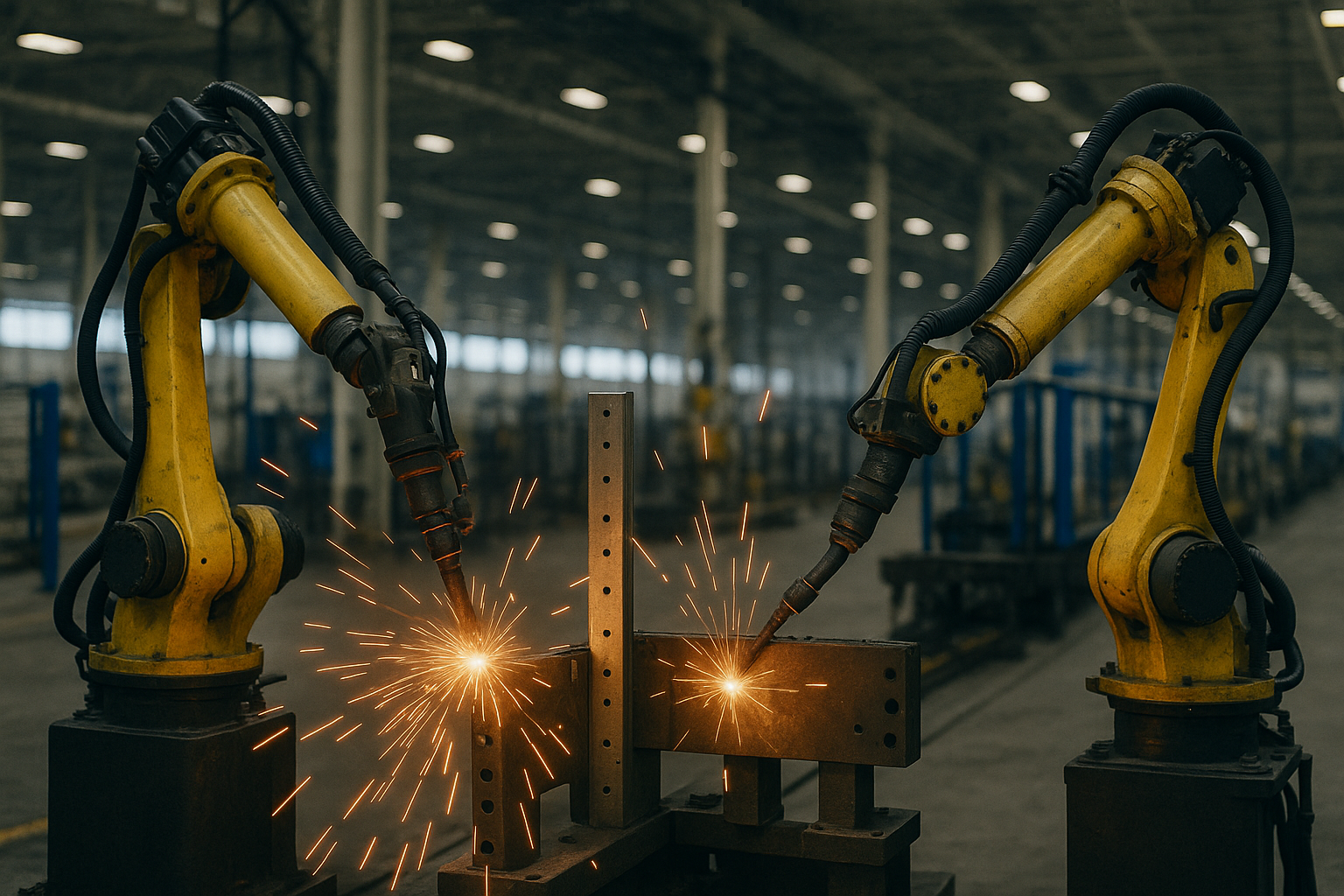
As we step into 2025, the integration of AI in welding automation has transformed the landscape of industrial manufacturing. With enhanced capabilities, AI technologies are driving significant improvements in speed, quality, and consistency across welding processes. This article delves into the advancements made in this field, offering insights into what manufacturers can expect in the near future.
Key takeaways
- Enhanced speed and efficiency in welding processes.
- Improved quality control through AI-driven monitoring.
- Increased consistency in welds, reducing rework rates.
- Cost savings through optimised resource allocation.
- Real-time data analytics for informed decision-making.
What this means for manufacturers
The implementation of AI in welding automation signifies a paradigm shift for manufacturers. As production demands escalate, the need for faster, more reliable welding processes becomes paramount. AI technologies facilitate:
- Streamlined Operations: Automation helps in reducing cycle times, allowing manufacturers to meet higher production quotas.
- Quality Assurance: AI systems monitor weld quality in real time, identifying defects before they escalate into costly issues.
- Resource Efficiency: By optimising material usage and reducing waste, manufacturers can significantly lower production costs.
For a broader look at how AI is transforming other machining processes, you can read our guide to AI powered CNC controls, published recently on MachineToolNews.ai.
Real world examples from shops or OEMs
Several leading manufacturers have adopted AI in welding automation, showcasing remarkable results. For instance:
- Company A: A major automotive manufacturer integrated AI-driven robots into their welding lines, achieving a 30% increase in production speed while maintaining high-quality standards.
- Company B: An aerospace OEM utilised AI for predictive maintenance of welding equipment, reducing downtime by 25% and enhancing overall operational efficiency.
- Company C: A metal fabrication shop implemented AI quality control systems, leading to a 40% reduction in rework rates, thereby saving time and costs.
Implementation and ROI for 2025
Investing in AI in welding automation not only enhances operational capabilities but also offers substantial returns on investment (ROI). Key considerations for implementation include:
- Initial Investment: While upfront costs may be significant, the long-term savings from reduced labour costs and increased productivity can justify the investment.
- Training and Integration: Ensuring staff are adequately trained to work alongside AI systems is crucial for maximising benefits.
- Measuring ROI: Manufacturers should establish clear metrics to evaluate the impact of AI on productivity, quality, and cost savings.
Industry suppliers such as ABB Robotics and research groups like the International Institute of Welding are also publishing real world success stories that show how AI driven welding cells operate under real factory conditions.
Common pitfalls and how to avoid them
While the adoption of AI in welding automation presents numerous advantages, manufacturers must be aware of potential pitfalls:
- Underestimating Complexity: Implementing AI systems can be complex; thorough planning and consultation with experts can mitigate challenges.
- Neglecting Employee Buy-in: Engaging employees in the transition process and addressing their concerns can foster a more collaborative environment.
- Ignoring Data Security: As AI systems rely heavily on data, ensuring robust cybersecurity measures is essential to protect sensitive information.
FAQ
What are the main benefits of AI in welding automation?
The primary benefits include enhanced speed, improved quality control, increased consistency, and cost savings through optimised processes.
How can manufacturers measure the ROI of AI implementations?
Manufacturers can measure ROI by tracking metrics such as production speed, defect rates, and overall cost reductions pre- and post-implementation.
What challenges might manufacturers face when adopting AI?
Common challenges include the complexity of integration, employee resistance, and data security concerns.
Are there specific industries that benefit more from AI in welding automation?
Industries such as automotive, aerospace, and heavy machinery manufacturing typically see significant benefits from AI in welding automation due to their high production demands and quality requirements.
In conclusion, the advancements in AI in welding automation for 2025 are set to revolutionise the manufacturing sector. By improving speed, quality, and consistency, manufacturers can enhance their competitiveness and drive sustainable growth. Embracing these technologies will be crucial for staying ahead in an increasingly automated future.


One Comment