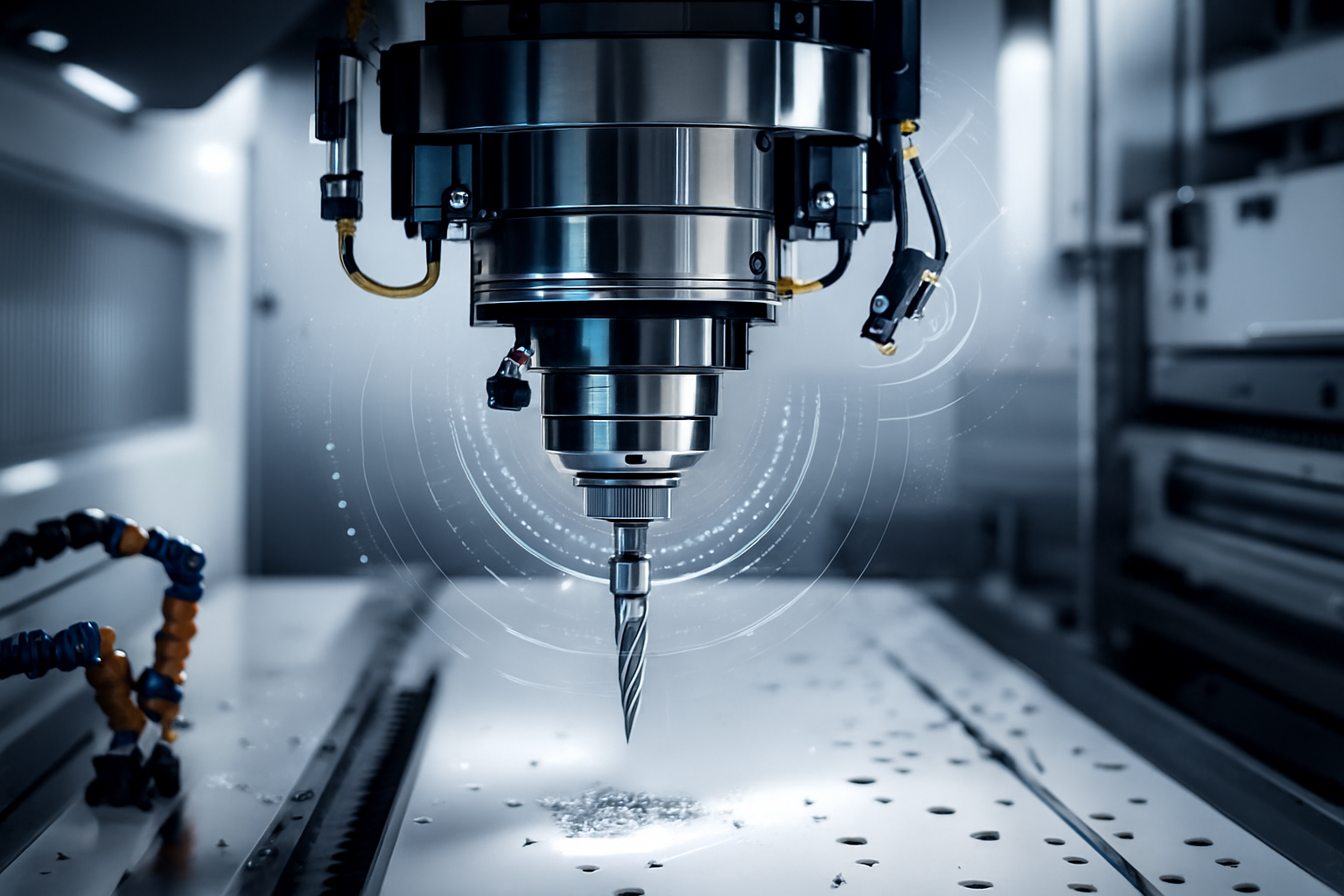
AI predictive maintenance CNC spindles is rapidly reshaping how machine shops prevent failures and reduce unplanned downtime. The newest generation of spindle monitoring systems doesn’t just record vibration it interprets spindle behaviour in real time, predicts failures earlier, and prevents crashes and unplanned downtime with far greater accuracy.
Unlike the first wave of “condition monitoring” tools, these new systems combine multi-sensor data, trained models, and continuous learning to detect early-stage degradation long before human operators or basic alarms would notice. For high-mix machining, aerospace programs, medical components, and long-cycle jobs, this is becoming one of the most valuable AI applications in the shop.
Below is a breakdown of what is actually working in real production environments across Europe and the US. Shops across Europe are reporting that ai predictive maintenance cnc spindles systems are giving them clearer visibility of spindle health than any previous monitoring method.
High-Frequency Vibration Models Catch Early Bearing Wear
Traditional condition monitoring detects bearing issues only when vibration amplitude crosses a fixed alert threshold. By that time, the problem is already severe.
AI-based vibration analytics work differently. These models track:
- harmonic distortion patterns
- frequency drift at different loads
- changes in spectral energy over time
- correlation between tool engagement and spindle response
When the model sees combinations of these signals deviating from historical patterns, it flags the bearing long before visible noise, heat or surface finish problems appear. The rise of ai predictive maintenance cnc spindles technology is helping machine shops move from reactive checks to planned, data-driven interventions.
Impact on real shops:
Shops using these systems report 20 to 40 percent fewer emergency spindle rebuilds and far fewer scrapped parts on long finishing cycles.
Read more → CAM Assist 2.0: Bringing Clarity, Control, and Confidence to AI-Driven CAM
Read more → AI in CNC
AI Learns the Normal Signature of Each Spindle, Machine, and Tooling Setup
Every spindle has its own “fingerprint”: a combination of noise, torque, vibration, and temperature that changes with age, alignment, tooling, coolant, and programming style.
AI predictive systems map this fingerprint automatically and continuously update it.
The models observe:
- torque draw under identical toolpaths
- spindle acceleration and deceleration curves
- thermal gradients across the housing
- micro-changes in axis load during direction changes
This is the critical point — the AI is not comparing your machine to a generic model. It is comparing the spindle to itself.
This is why accuracy improves dramatically after 30 to 60 days of runtime.
Real-Time Anomaly Detection Prevents Tool Crashes
While classic monitoring waits for threshold breaches, the new AI anomaly models look for behavioural changes.
Examples include:
- unexpected torque spikes during entry
- unstable harmonics in thin-wall machining
- heat increases in low load conditions
- rising vibration signatures during long toolpaths
When the anomaly score crosses a limit, the CNC control can slow the feed, pause the cycle, or trigger an early tool change. Shops using AI predictive maintenance CNC spindles are reporting earlier detection of vibration anomalies, thermal drift, and micro damage before failure occurs.
Shops using this report:
- fewer ruined fixtures
- fewer spindle taper damages
- significant reduction in catastrophic tool breakage
This saves both spindles and expensive tooling.
By adopting ai predictive maintenance cnc spindles, manufacturers are reducing unexpected stoppages and gaining longer, more stable spindle life.
AI + Edge Computing Makes Instant Decisions Possible
Previously, predictive maintenance tools sent sensor data to the cloud. The delay was unacceptable during machining.
In 2025, almost all serious OEMs have shifted to edge AI – inference engines running directly inside the CNC control or on a local gateway.
This enables:
- <5 ms response times
- no reliance on internet connectivity
- real-time correction during cutting
- full data ownership for the shop
Read more → Edge AI in Metal Factories: Why Local Processing Is Beating the Cloud
Predictive Maintenance Scheduling Is Finally Driven by Real Data
Instead of using fixed “500-hour” intervals, shops now create maintenance calendars based on:
- machine-specific spindle signatures
- cutting-force trends
- thermal drift rate
- spindle lubrication breakdown patterns
- historical anomaly scores
Maintenance teams switch from time-based to condition-based servicing.
This has improved spindle life by 12 to 18 percent in the shops that have implemented it properly.
What Isn’t Working – And What to Avoid
Not every implementation succeeds. Shops consistently fail when:
- sensors are added but never calibrated
- the AI system uses generic models instead of machine-specific ones
- data is fragmented across multiple software layers
- operators are not trained to understand the warning signals
Shops that pair AI alerts with operator workflow changes get the best results. Real workshop data now shows that ai predictive maintenance cnc spindles platforms are detecting early failure stages long before operators can sense performance loss.
What Machine Shops Should Do Next
This year, many OEMs are integrating ai predictive maintenance cnc spindles directly inside next-generation controls to improve uptime and cut maintenance waste.
To get real value from AI predictive maintenance for CNC spindles:
- Install multi-sensor kits (vibration, thermal, torque, acoustic).
- Run the models for at least 30 days before expecting results.
- Assign one owner for monitoring anomaly scores.
- Integrate alerts into the CNC operator workflow.
- Connect predictive maintenance to CAM optimisation to remove excessive cutting load
The shops that follow this structured approach report the highest ROI and fastest reduction in unplanned downtime.
Engineering.com reports that predictive algorithms now pick up early-stage spindle anomalies long before operators can hear or feel them.



One Comment