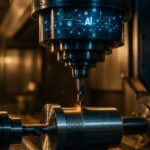
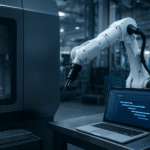
Welding has always been a critical stage in sheet metal fabrication. A single defect – a crack, porosity, or incomplete fusion, can compromise an entire assembly, leading to costly rework or even structural failure. Traditionally, quality has relied on skilled welders and post-process inspections. But today, AI welding sheet metal technologies are shifting defect prevention from a reactive step to a proactive one.
Instead of finding errors after the weld is complete, AI systems are now predicting and preventing defects before they occur.
How AI Is Transforming Sheet Metal Welding
Artificial intelligence in welding doesn’t replace the welder; it augments their precision. Using real-time sensors, machine vision, and predictive analytics, AI platforms continuously monitor parameters such as:
- Torch angle and travel speed
- Arc stability and temperature
- Material thickness and fit-up conditions
- Gas flow and shielding quality
These variables are then processed against historical data. If a potential defect pattern emerges – such as excessive heat input that could cause warping – the AI system alerts the operator or even auto-corrects parameters.
This approach reduces reliance on post-weld inspection and ensures defects are eliminated before the weld is laid down.
Benefits of AI Welding in Sheet Metal Fabrication
1. Consistency Across Shifts and Locations
In global manufacturing environments, maintaining uniform weld quality is a challenge. AI-driven welding ensures that whether the job is run in Detroit or Düsseldorf, parameters remain consistent.
2. Reduced Rework and Scrap
Defect prevention translates directly into cost savings. Instead of scrapping entire sheet metal components due to weld porosity, AI systems catch anomalies in real time.
3. Faster Qualification and Training
For new welders, AI-powered guidance systems provide on-screen feedback, shortening the learning curve and raising baseline quality standards.
4. Data-Driven Traceability
Every weld can be logged, with full parameter history available for audits. This is especially valuable in industries like aerospace and automotive, where documentation is non-negotiable.
Case Example: Predictive Welding in Automotive Sheet Metal
Several automotive OEMs have integrated AI welding into sheet metal body-in-white assembly. Machine vision tracks the weld seam while predictive AI models adjust heat input dynamically. This not only prevents burn-through but also extends electrode life in spot welding applications.
According to a 2024 Fraunhofer Institute study, AI-enhanced welding reduced defect rates in sheet metal components by up to 40%, while also cutting inspection time by 25%. Read the study here.
Implementation Considerations
Adopting AI welding for sheet metal isn’t simply a plug-and-play upgrade. Executives should consider:
- Integration with existing welding robots – ensuring AI platforms can communicate with Fanuc, ABB, or Yaskawa robotic systems.
- Cloud vs. edge processing – balancing real-time decision-making needs with data storage strategies.
- Workforce training – welders and engineers need familiarity with interpreting AI outputs and maintaining digital twins.
The Strategic Edge for Fabricators
For sheet metal fabricators, AI welding is more than defect prevention – it’s a competitive differentiator. Customers increasingly demand zero-defect deliveries, shorter lead times, and documented quality. Shops that integrate AI not only minimize rework costs but also position themselves as advanced, reliable partners.
This shift echoes broader trends across manufacturing. AI is being applied across sheet metal fabrication, CNC machining, and robotics, creating smarter, defect-free production systems.
AI Welding as a Quality Strategy
The move from inspection to prediction is reshaping how fabricators approach welding. By embedding AI directly into welding processes, sheet metal manufacturers gain stronger welds, fewer defects, and more predictable outcomes. Beyond improving day-to-day operations, AI also supports long-term process optimization by capturing data, identifying trends, and enabling continuous improvement across multiple production sites.
For executives, the message is clear: AI welding sheet metal isn’t just a technology investment—it’s a comprehensive quality assurance strategy that enhances competitiveness, ensures customer trust, and lays the groundwork for scalable, defect-free production.