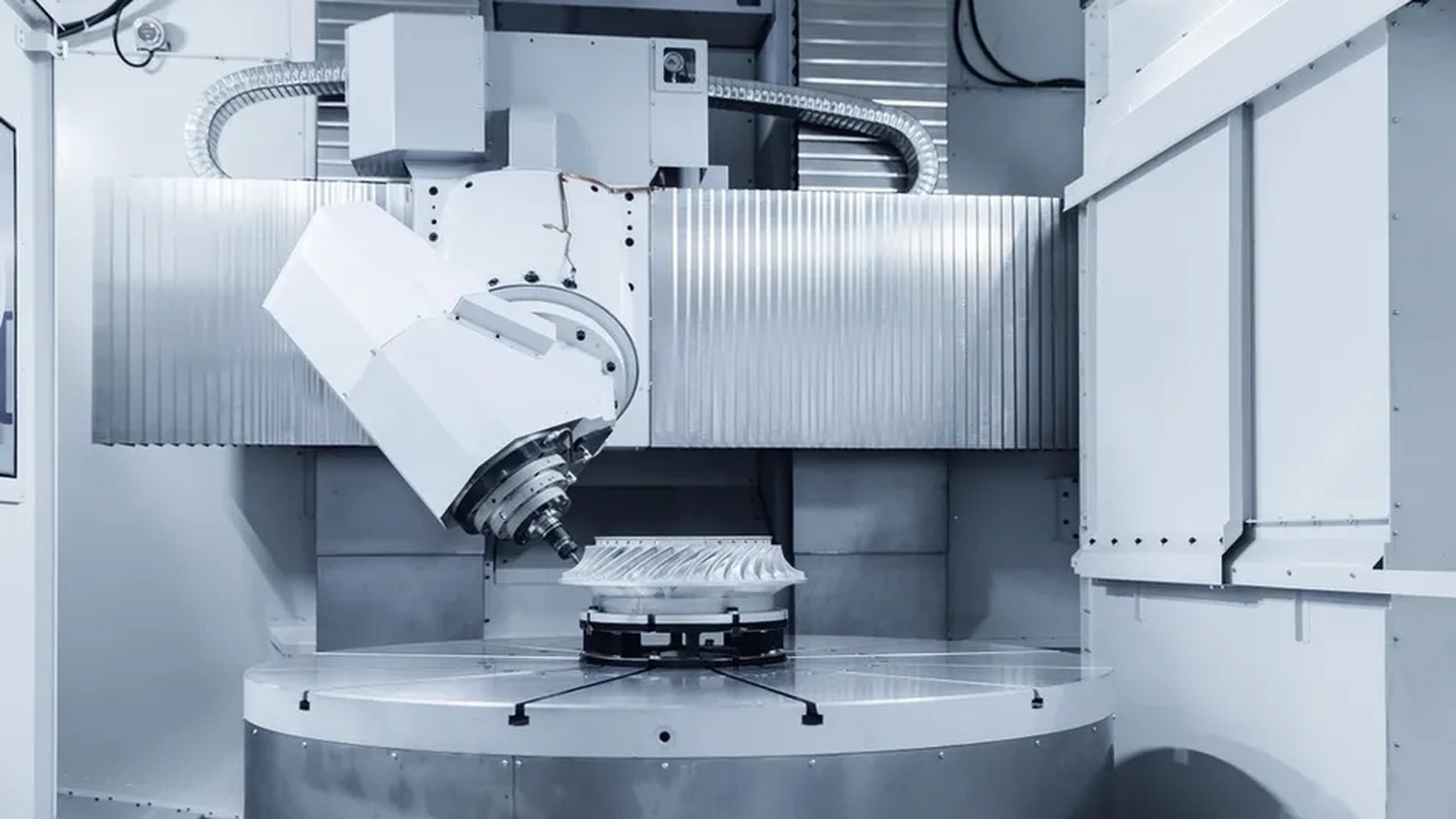
AI Toolpath Optimisation 2026 is no longer about shaving seconds from roughing cycles. For experienced CAM programmers the real shift is how modern CAM systems are modelling cutting behaviour with far greater precision and using that intelligence to improve programming decisions.
Traditional optimisation approaches relied on deterministic strategies. Tool engagement was estimated, feed rates were calculated from static parameters and post processing assumed ideal machine behaviour.
In 2026 that model is evolving. Modern CAM systems are beginning to incorporate deeper engagement modelling, predictive load management and in early cases feedback from real production data.
These changes are increasingly visible across modern CAM platforms, particularly when comparing the architectures discussed in our analysis of AI CAM Software 2026.
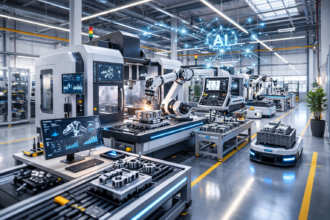
This transition is redefining how programmers approach toolpath strategy. Modern CAM platforms are increasingly structured around AI Toolpath Optimisation 2026, where machining strategies adapt to predicted cutting conditions rather than relying only on static programming rules.
Tool Engagement Modelling Is the Core of Modern CAM Optimisation
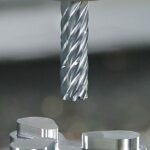
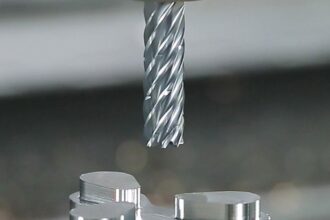
The fundamental constraint in toolpath optimisation remains chip load stability.
Experienced programmers understand the problem well. Inconsistent engagement leads to unstable loads, premature tool wear and unpredictable surface quality.
Modern CAM engines increasingly address this through advanced engagement modelling.
Rather than calculating feed rates only from geometry, newer toolpath algorithms consider:
- instantaneous cutter engagement angle
- radial chip thinning effects
- axial depth stability
- tool deflection potential
- stock boundary interaction
This allows CAM software to maintain more consistent tool loading throughout complex toolpaths.
High speed roughing strategies such as adaptive clearing already rely heavily on this modelling. The difference in AI Toolpath Optimisation 2026 is that the modelling depth continues to improve.
Toolpaths are no longer optimised purely for path efficiency. They are increasingly optimised for cutting stability.
Predictive Material Removal Modelling
Another major development in AI toolpath optimisation is the improvement of material removal prediction.
Earlier CAM generations relied heavily on geometric simulation. While visually accurate these simulations often failed to capture the true mechanical behaviour of cutting processes.
Today several CAM platforms are integrating more sophisticated modelling approaches including:
- volumetric material removal prediction
- engagement based load calculation
- dynamic feed rate adjustment during path generation
The result is toolpaths that maintain more stable cutting forces across varying geometries.
This is particularly relevant in:
- aerospace components with variable wall thickness
- mould tools with complex surface transitions
- multi axis machining where tool orientation constantly changes
Accurate modelling of cutting engagement is becoming the backbone of reliable toolpath optimisation.
Feed Rate Stability and Adaptive Motion
Another area evolving quickly is feed rate management.
In conventional programming workflows feed rates are often conservative to protect tools and machines. This results in under utilised machine capacity. This is where AI Toolpath Optimisation 2026 becomes particularly valuable, allowing CAM systems to stabilise chip load and cutting forces across complex toolpaths.
AI assisted optimisation approaches attempt to address this by adjusting feed rates dynamically according to predicted cutting conditions.
Typical strategies now include:
- automatic feed rate smoothing across toolpath segments
- engagement based feed adjustments
- acceleration aware path smoothing
- machine specific kinematic constraints
The goal is not maximum feed rate. The goal is stable cutting conditions across the entire toolpath.
Maintaining stable cutting forces improves both tool life and surface quality.
How CAM Vendors Are Implementing Toolpath Intelligence
Different CAM vendors are approaching AI toolpath optimisation from different architectural directions.
Some systems prioritise deterministic control and stable engagement modelling.
Others emphasise ecosystem integration with machine controllers and digital twins.
For example:
- Some platforms optimise toolpaths primarily through advanced geometric modelling.
- Others attempt to integrate simulation with machine behaviour models.
This difference is visible when analysing the architectures behind modern CAM systems such as hyperMILL, NX CAM, Mastercam and Fusion.
Advanced engagement modelling strategies can be seen in systems such as hyperMILL, where toolpath algorithms are designed to maintain stable cutter load during complex 5 axis machining operations.
What is clear across vendors is that optimisation is shifting from purely geometric logic toward deeper cutting physics modelling.
The Emerging Role of Real Machine Data
Perhaps the most important development in AI Toolpath Optimisation 2026 is the early integration of real machine data.
Historically CAM systems operated in isolation from production feedback.
Programmers created toolpaths. Machines executed them. CAM rarely learned from the outcome.
That gap is beginning to close.
Emerging approaches attempt to incorporate production data such as:
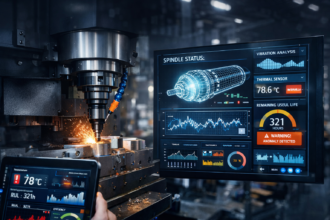
- spindle load variation
- tool wear patterns
- surface deviation measurements
- machine vibration signals
While still limited in commercial deployment these feedback loops represent the next stage of CAM intelligence.
When CAM systems begin adjusting future toolpaths based on real machining outcomes optimisation will move beyond simulation toward adaptive manufacturing.
MTN Analysis
AI toolpath optimisation is approaching a structural transition.
For decades optimisation improvements focused on geometry and path efficiency. Modern CAM systems are now incorporating deeper models of cutting physics and machine behaviour.
The next phase will depend on closing the feedback loop between CAM programming and production telemetry.
Several conditions must be met for this to become widespread:
- reliable machine data collection
- standardised telemetry interfaces
- integration between CAM and machine control systems
- data models capable of learning across multiple machining environments
Some ecosystem driven platforms may be structurally positioned to implement these feedback loops earlier.
However across the industry the shift toward adaptive feedback informed toolpath optimisation is still emerging.
When it matures it will fundamentally change how machining strategies are generated.
For further technical coverage and industry developments explore our AI in CNC section. The long term impact of AI Toolpath Optimisation 2026 will depend on how effectively CAM software can combine simulation models with real machine data.
Key Takeaways
- AI Toolpath Optimisation 2026 is moving beyond geometry based strategies
- Engagement modelling is becoming more sophisticated
- Feed rate stability is increasingly automated
- Predictive material removal modelling is improving simulation accuracy
- Integration of real machine data represents the next frontier
FAQ
What is AI toolpath optimisation
AI toolpath optimisation refers to CAM algorithms that analyse tool engagement, cutting loads and machining conditions to generate more stable and efficient toolpaths.
How is toolpath optimisation evolving in modern CAM systems
Modern systems increasingly combine engagement modelling, predictive simulation and feed rate control to maintain stable cutting conditions across complex toolpaths.
Can real machine data influence CAM programming
In early implementations machine telemetry such as spindle load and tool wear data is beginning to inform optimisation models.
Why does tool engagement modelling matter
Stable tool engagement reduces cutting force fluctuations, improves tool life and produces more consistent surface quality.
Many CAM vendors are now prioritising AI Toolpath Optimisation 2026 as a core capability for improving machining stability and programming efficiency.