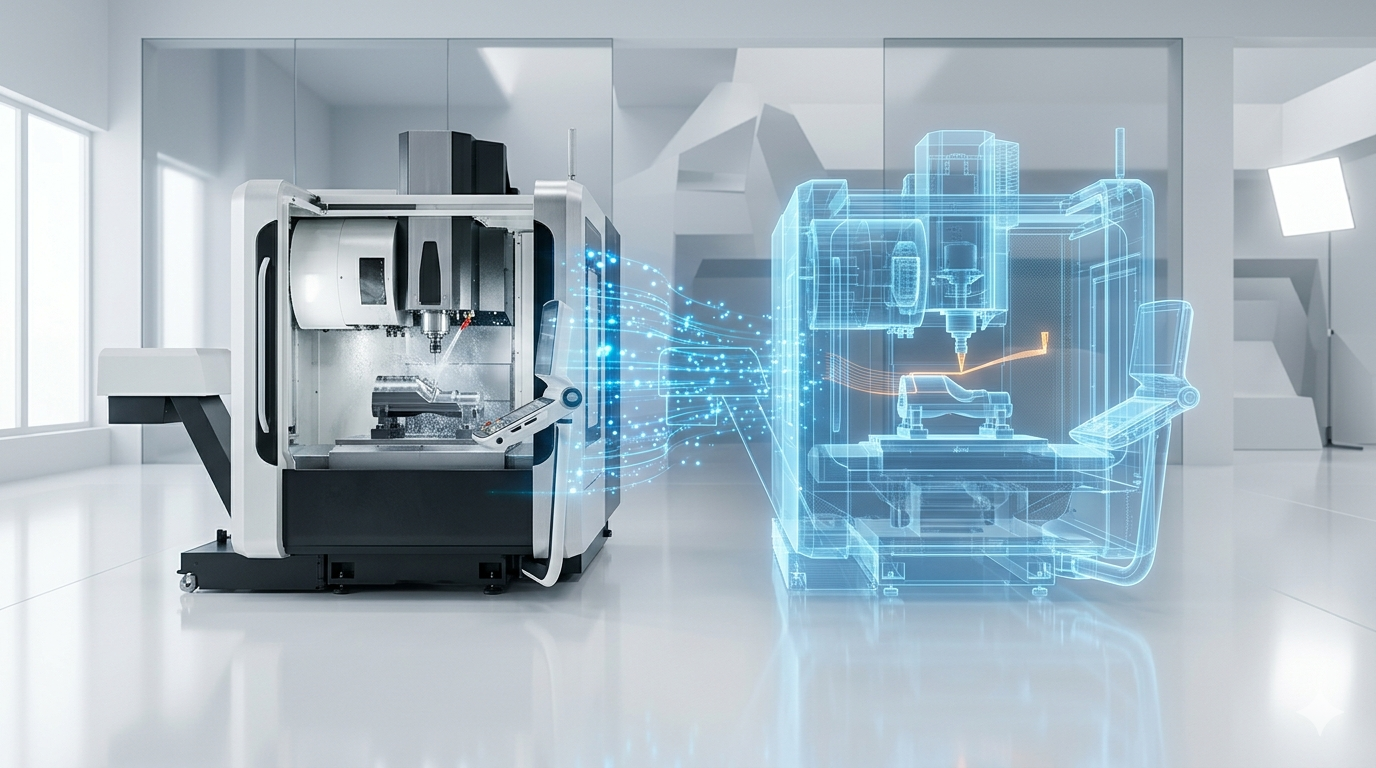
Digital Twin in Manufacturing is becoming one of the most talked-about technologies in industrial AI. It allows manufacturers to create a real-time virtual replica of machines, production lines, or entire factories.
Strong industrial authority and directly aligned with manufacturing use cases. Siemens explains how digital twins “analyze the past, reflect the present and predict the future,” which reinforces your article’s core message.
This virtual model is continuously updated with live data from the physical environment, enabling simulation, monitoring, and optimization without interrupting production.
What Is Digital Twin in Manufacturing?
Digital Twin in Manufacturing is a dynamic digital representation of a physical asset, process, or system.
Unlike a static 3D model, a digital twin is connected to real-world data through sensors and industrial software. This means it evolves in real time, reflecting exactly what is happening on the shop floor.
In practice, a digital twin can represent:
- A single CNC machine
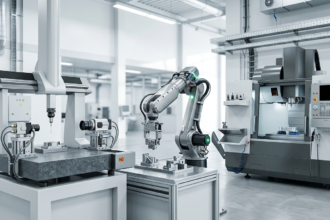
- A robotic cell
- A full production line
- An entire smart factory
How Digital Twins Work
At the core of Digital Twin in Manufacturing is continuous data exchange.
Physical systems send data such as:
- Temperature
- Vibration
- Tool wear
- Cycle times
- Energy consumption
This data feeds into a virtual model, which uses AI and simulation to:
- Predict future performance
- Identify inefficiencies
- Test process changes virtually
The result is a feedback loop between the physical and digital worlds. Clear explanation of real-world value like optimization, real-time data use, and process improvement. It strengthens your practical angle.
Why Digital Twins Matter in 2026
Manufacturers are adopting Digital Twin in Manufacturing because it directly impacts performance, cost, and risk.
1. Simulation Without Risk
Production changes can be tested virtually before being applied in reality.
2. Faster Process Optimization
Engineers can identify bottlenecks and improve workflows using real-time insights.
3. Predictive Maintenance
Digital twins simulate machine behavior to detect failures before they occur.
4. Reduced Downtime
Problems can be diagnosed and solved in the virtual environment before affecting production.
Real-World Applications
Digital Twin in Manufacturing is already being used across multiple industries:
CNC Machining
Simulating toolpaths, cutting forces, and machine dynamics before running actual parts.
Robotics
Testing robotic movements and workflows to optimize efficiency and avoid collisions.
Factory Layout Planning
Designing and validating production lines before physical installation.
Energy Optimization
Monitoring and reducing energy consumption across entire facilities.
Digital Twin vs Simulation
While often confused, they are not the same.
- Simulation is typically static and scenario-based
- Digital Twin is live, continuously updated with real data
A digital twin evolves alongside the physical system, making it far more powerful for ongoing optimization.
Technologies Behind Digital Twins
The rise of Digital Twin in Manufacturing is driven by:
- Industrial IoT sensors
- Cloud and edge computing
- AI and machine learning models
- Advanced simulation software
- High-performance data processing
These technologies enable accurate, real-time digital representations of physical systems.
Challenges to Adoption
Despite strong interest, adoption is not without challenges:
- High implementation cost
- Integration with legacy systems
- Data accuracy and consistency issues
- Complexity of building accurate models
Manufacturers need clear ROI cases to justify investment.
MTN Analysis
Digital Twin in Manufacturing is moving from concept to operational tool.
The biggest shift is how it changes decision-making. Instead of reacting to problems, manufacturers can now simulate outcomes before they happen.
This has major implications for machine tool builders and software providers. The value is no longer only in the machine itself, but in the digital layer that sits alongside it.
The companies that win in this space will be those that tightly integrate simulation, real-time data, and AI into a single environment.
Digital twins are becoming a foundation for intelligent manufacturing rather than an optional add-on.
Explore more real-world applications in our AI in CNC coverage, where digital twin technology is already improving machining performance.
Key Takeaways
- Digital twins are real-time virtual replicas of physical systems
- They enable simulation, monitoring, and optimization
- They reduce risk by testing changes virtually
- They are already used in CNC, robotics, and factory planning
- They are becoming central to smart factory strategies
FAQ: Digital Twin in Manufacturing
What is Digital Twin in Manufacturing?
A real-time digital replica of machines or production systems connected to live data.
How is it different from simulation?
A digital twin is continuously updated with real-world data, while simulation is static.
What are the benefits?
Improved efficiency, reduced downtime, predictive maintenance, and better decision-making.
Where is it used?
CNC machining, robotics, factory design, and energy optimization.
Is it expensive to implement?
Initial costs can be high, but ROI comes from efficiency gains and reduced downtime.