Machine shops are beginning to rely on AI to reduce scrap rates in 2025, and this shift is reshaping how quality control and process stability are managed on the shop floor. How machine shops are using AI to reduce scrap rates in 2025 is becoming one of the biggest efficiency shifts in modern machining.
Scrap is one of the largest hidden costs in European machining and sheet-metal operations. Many shops roughly estimate scrap at 3 percent of total output, but when rework, machine time, labour hours, energy usage, and material inflation are included, the real figure often climbs above 6 to 8 percent.
Across Europe and the US, how machine shops are using AI to reduce scrap rates in 2025 has become a key priority as manufacturers push for higher accuracy and lower waste.
Independent analysis from Engineering.com shows that AI-driven inspection and predictive detection can reduce scrap by identifying defects earlier in the cycle.
This story explores how machine shops are using AI to reduce scrap rates in 2025 by preventing errors earlier in the machining workflow.
In 2025, machine shops are attacking this problem using a combination of AI-driven inspection, smarter nesting engines, in-process monitoring, and predictive correction systems. These technologies are no longer experimental. They are already delivering measurable reductions in waste, often within the first few weeks of deployment.
This report explains how machine shops are using AI to reduce scrap rates in 2025 and the practical technologies delivering results.
How machine shops are using AI to reduce scrap rates in 2025
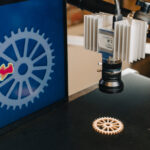
By applying AI reduce scrap rates models to live machining data, shops can detect defects earlier and prevent entire batches from becoming waste. Most scrap originates before machining even begins. AI systems are now scanning raw material sheets, billets, and blanks to identify:
- surface inconsistencies
- internal defects
- plate warping
- coating irregularities
- material property deviations
Modern vision systems use structured light and deep-learning models trained on thousands of surface patterns. They can detect flaws that operators cannot see. Modern Machine Shop reports that AI-based inspection and in-cut monitoring systems have reduced scrap by double-digit percentages in early industrial deployments
Impact:
- avoids machining compromised material
- reduces tool wear
- prevents entire batch loss
- ensures better consistency for aerospace and medical customers
For more info check out these articles too: AI in Sheet Metal
Smarter Nesting Algorithms Reduce Offcuts by 8 to 15 Percent
In sheet metal, AI-driven nesting is one of the most powerful scrap reduction tools.
Traditional nesting engines follow geometric rules. AI nesting models in 2025 use:
- part orientation prediction
- adaptive kerf calculations
- dynamic heat avoidance
- micro-joint optimisation
- grain direction reinforcement
- sheet inventory awareness
This leads to tighter nests, fewer islands, and better sheet utilisation.
Example:
A 4 kW fibre laser running 3 mm stainless saw its monthly sheet usage drop by 12 percent after switching to a predictive nesting model that automatically adjusts part rotation based on upstream grain direction.
For more info check out these articles too: AI-Driven Sheet Metal Nesting: Cutting Scrap and Carbon
In-Process AI Monitoring Prevents Scrap Mid-Cut
AI models now monitor real-time machine conditions using sensors such as:
- vibration
- spindle load
- harmonic analysis
- thermal signatures
- acoustic emissions
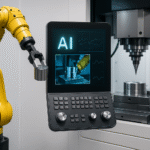
When instability is detected, the system adjusts the machining parameters before the cut is compromised. One of the most important shifts in how machine shops are using AI to reduce scrap rates in 2025 is the move to real-time in-process monitoring.
What it prevents:
- poor surface finish
- dimensional drift
- micro-chatter
- tearing during bending
- overheating on laser cuts
- premature tool wear leading to scrap
A German aerospace supplier recently reported a 27 percent decrease in rework after enabling in-process AI monitoring on titanium milling programs.
Check out this interview we had with Theo from CloudNC to discuss what’s new in CAM Assist 2.0, how it’s changing the CAM landscape, and what the next few years hold for AI in manufacturing CAM Assist 2.0: Bringing Clarity, Control, and Confidence to AI-Driven CAM
AI Predicts Tool Wear Before Dimensions Drift
Most dimensional scrap happens because tools degrade before scheduled tool changes. New AI wear models now help machine shops reduce scrap rates in 2025 by tracking cutter condition across dozens of live-process variables. Instead of relying on fixed tool-life rules, AI-driven scrap reduction systems make dynamic, real-time predictions based on what the machine is actually experiencing.
These models analyse:
- changes in cutting force
- spindle power consumption
- vibration frequency shifts
- heat generation patterns
- chip morphology
- micro-deflection trends during finishing
- sudden instability in small-diameter tools
AI Links Inspection Results Back to CAM and CNC
This is one of the biggest changes in 2025. Modern AI inspection systems do not just flag a defect. They automatically close the loop by adjusting machining parameters on the next part or batch.
Real workflow example:
- Vision system measures 300 dimensions in under 2 seconds
- AI identifies a 0.04 mm drift
- System adjusts the toolpath or feed rate on the CNC program
- Operator receives a notification and approves or rejects the correction
- All data stored in the machine’s digital log
This prevents serial defects – the most expensive kind of scrap.
Energy and Heat Mapping AI Improves Laser and Plasma Accuracy
Heat distortion is a silent scrap contributor. AI heat-mapping tools simulate the thermal footprint of a cut before it happens.
They automatically adjust:
- pierce location
- lead-in and lead-out
- cut order
- speed
- micro-joint placement
Outcome:
- straighter parts
- fewer warped profiles
- tighter tolerances
- lower finishing time
A Dutch fabricator reduced rework on 10 mm mild steel by 18 percent using predictive heat compensation.
AI Identifies Which Jobs Produce the Most Scrap
Many shops do not actually know where most waste originates.
AI analytics pull data from machines, inspection logs, operator notes, and ERP systems to rank jobs by:
- scrap percentage
- scrap root cause
- scrap cost
- scrap location (start/end/mid-cut)
This allows management to intervene in the right place. This approach is one of the most effective ways of how machine shops are using AI to reduce scrap rates in 2025 while improving consistency.
Real example:
One UK job shop discovered that 74 percent of its scrap came from one recurring batch of stainless steel brackets due to heat distortion. Targeting that one product line cut total scrap by 26 percent.
Conclusion: AI Is Now a Direct Profit Generator
Understanding how machine shops are using AI to reduce scrap rates in 2025 is essential for improving quality and reducing waste. Across Europe, metal manufacturers are seeing scrap reductions between 12 and 40 percent depending on the combination of tools deployed. Shops adopting AI reduce scrap rates workflows are reporting more consistent quality, lower rework, and improved OEE across all production runs.
Instead of relying only on operator experience or post-process inspection, AI now influences decisions from raw material arrival to final measurement.
For competitive shops, reducing scrap is not about saving material. It is about:
- higher machine uptime
- fewer operator interventions
- consistent dimensional accuracy
- lower energy consumption
- higher throughput
The shops using AI in 2025 are not just improving quality. They are increasing daily billable output. This shows how machine shops are using AI to reduce scrap rates in 2025 by turning real-time data into measurable efficiency gains.
MachineToolNews.ai on LinkedIn