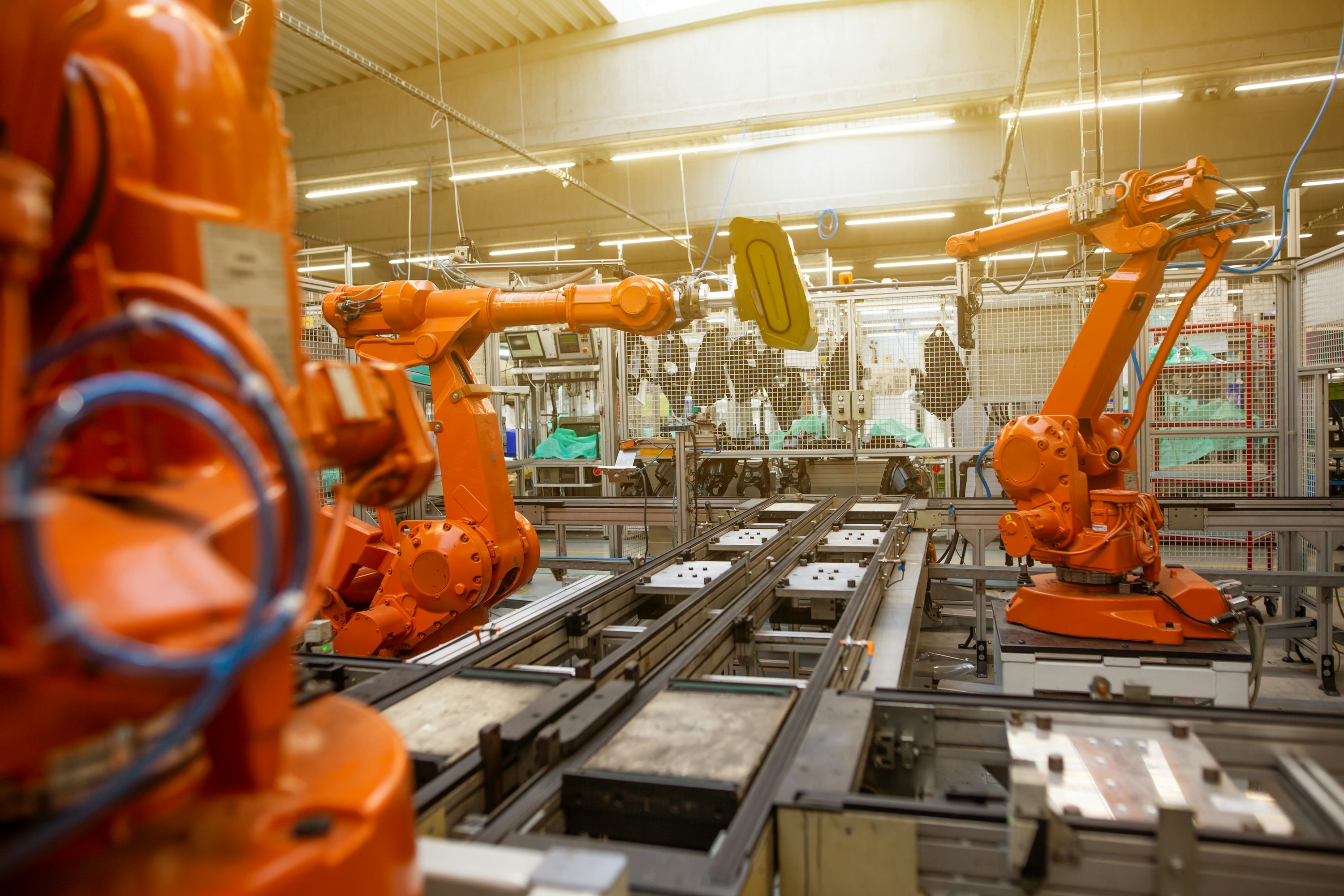
AI welding robots in Germany are moving into a more advanced stage of industrial automation through smart arc control. Germany’s welding robots get an AI upgrade with smart arc control that is now being introduced across metalworking, automotive and heavy fabrication lines during 2025. This new generation of robotic welding uses AI powered real time arc control, adaptive seam tracking, heat input optimisation and computer vision feedback loops that adjust the welding process as conditions change. AI welding robots support consistent penetration, stable weld pools and adaptive heat input across varied production environments.
German manufacturers report that smart arc control is becoming a key requirement for reducing scrap, maintaining weld quality and strengthening capacity during long term shortages of qualified welders.
How AI welding robots are changing German manufacturing
Smart arc control refers to AI driven systems that monitor arc behaviour and weld bead formation during the welding process. Instead of relying on perfectly uniform joint geometry, the robot learns the surface and continuously adjusts voltage, travel speed, filler feed rate, heat input and torch placement.
The most recent systems used in Germany also include thermal cameras and multi layer imaging to identify gaps, burn through risks and weld pool instability. Adaptation happens during the weld, which significantly increases consistency even on mixed part production runs. German suppliers are introducing AI welding robots to stabilise quality across multiple shifts and plants. Our AI in Sheet Metal hub also tracks computer vision, adaptive laser processing and factory level automation that connects with welding operations.
Leading German integrators report that adaptive arc control works particularly well on body in white welding where even small deviations can produce large costs later in assembly. AI welding robots reduce scrap and rework by modifying welding parameters in real time.
Why Germany Is Scaling AI Powered Welding Robotics
Three drivers are accelerating adoption:
- Skilled welder shortages across automotive and metal fabrication
- High requirements for repeatable structural weld quality
- The move toward predictive and data supported manufacturing
German automotive suppliers are also implementing smart arc welding to achieve lower cycle time variation between shift patterns. AI control reduces the dependency on operator experience which supports stable quality across multiple plants.
Verified 2025 Developments in the German Market
1. Neura Robotics welding applications
Stuttgart based Neura Robotics has expanded its industrial welding application portfolio with sensor fusion and adaptive torch control. Several German welding cell integrators interviewed in autumn 2025 reported pilot installations that reduce fixture dependency on medium batch production, which cuts setup time and scrap.
2. Novarc AI welding intelligence arriving in Europe
Novarc is bringing its NovAI welding intelligence platform into European robotic and cobot welding. The platform combines real time video and learning models that classify welding conditions and take corrective actions without operator intervention. Early evaluation in Germany shows gains in weld penetration consistency on thick plate and heavy fabrication work.
3. Automotive Tier suppliers using smart arc analytics
Tier suppliers in Baden Württemberg confirm that analytics from smart welding cells are being pushed into factory MES layers so that welding decisions can be correlated with upstream part variation and downstream defect analysis. This is part of the broader Industry 4.0 roadmap across German automotive operations in 2025 and 2026.
Practical Benefits for German Manufacturers
- Reduction in rework and scrap
- Stronger seam quality and repeatability
- Lower dependency on manual experience
- Shorter ramp up time for new weld programs
- Continuous quality monitoring inside the weld cell
Smart arc control also creates data for digital traceability and predictive maintenance strategies. This supports supplier audits and provides quantifiable evidence of quality, which is valuable for high value metal components and long term industrial supply contracts.
Challenges During Implementation
Some factories report that integrating adaptive welding requires updates to offline programming workflows, calibration routines and camera maintenance. The investment also includes training robotics teams to understand process parameters and sensor management.
The majority of German companies adopting AI welding in 2025 are introducing it cell by cell, beginning with high volume structural joints and then moving into more complex geometries once return on investment has been demonstrated.
Outlook for Late 2025 and 2026
Smart welding in Germany is expected to connect directly with digital quality systems and automated inspection tools. The next phase will combine AI arc control with in process defect recognition and automated corrective re welding.
Research underway in Germany is also focused on integrating simulation models so that welding cells can predict heat distortion before the weld begins. These simulation driven welding decisions will help automate tool offset, joint preparation and fixture design inside German metalworking plants.
Germany’s Welding Robots Get an AI Upgrade With Smart Arc Control will continue to expand through 2026 as manufacturers prioritise welding consistency and data driven automation.
AI enhanced welding will become standard practice in German automotive, steel fabrication and machinery manufacturing through 2026 as the skills shortage continues and as plant operators prioritise measurable defect reduction and material efficiency.