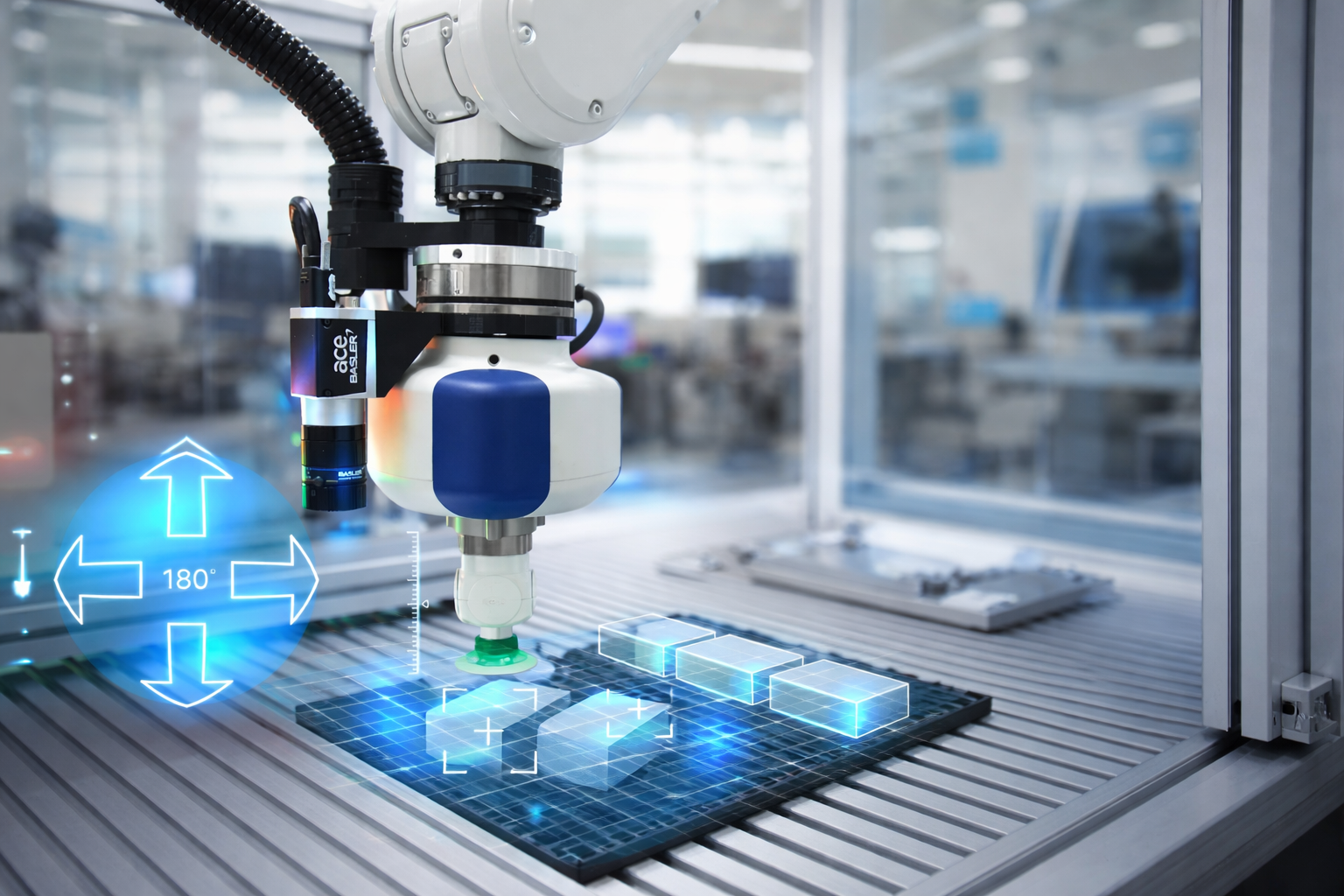
Physical AI in Robotics and Automation refers to artificial intelligence systems that interact directly with the physical world through machines such as robots, sensors, and industrial equipment. Unlike traditional AI that works mainly with digital data, Physical AI enables machines to perceive environments, make decisions, and perform real-world actions.
Factories, warehouses, and logistics operations increasingly rely on Physical AI to allow robots and automated systems to adapt to complex environments, handle unpredictable tasks, and collaborate with human workers. The result is a new generation of intelligent machines capable of learning from real-world conditions rather than following rigid pre-programmed instructions.
In modern manufacturing, Physical AI is becoming a critical foundation for robotics, autonomous production systems, and smart factories.
Physical AI in robotics and automation is quickly becoming one of the most important technologies shaping the future of smart factories and industrial automation.
What Exactly Is Physical AI?
Physical AI in Robotics and Automation combines several technologies that allow machines to understand and interact with the physical environment.
These technologies include:
• Machine learning
• Computer vision
• Sensor fusion
• Robotics control systems
• Reinforcement learning
Together these systems allow robots and automated equipment to interpret physical surroundings, understand objects, and perform actions with precision.
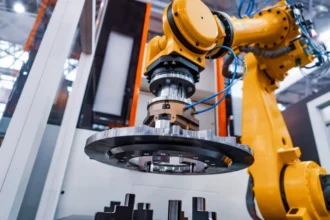
For example, a robotic arm equipped with cameras and AI software can identify different components on a production line, determine how to pick them up, and adjust its movement in real time.
This capability moves robotics beyond traditional automation, where machines repeat the same programmed motion without understanding the environment.
How Physical AI Works in Industrial Robotics
Physical AI operates through a loop of perception, reasoning, and action.
1. Perception
Sensors gather information about the environment.
Examples include:
• Industrial cameras
• LiDAR scanners
• Force sensors
• Temperature sensors
• Motion detectors
Computer vision systems analyse this data so machines can recognise objects, surfaces, or human workers.
2. Decision Making
AI models process the collected data and determine the best action.
For example, a robotic system may decide how to grip an irregular metal component or determine whether a part is defective.
3. Physical Action
The robot then performs the task through motors, robotic arms, autonomous vehicles, or production machinery.
The system continues learning from each action, improving performance over time.
In modern factories, physical AI in robotics and automation allows machines to interpret real-world data from sensors and cameras before making decisions about movement, manipulation, or inspection tasks.
Examples of Physical AI in Manufacturing
Physical AI is already transforming several areas of industrial automation.
Intelligent robotic assembly
Robots can identify parts and assemble products even when components arrive in random orientations.
Autonomous mobile robots
Warehouse robots use AI to navigate complex environments and avoid obstacles while transporting materials.
AI powered quality inspection
Vision systems equipped with machine learning models detect defects in components during production.
Adaptive CNC machining
AI systems monitor cutting conditions and adjust feed rates or tool paths to maintain precision.
Human robot collaboration
Collaborative robots use AI to detect human movements and safely operate alongside workers.
Why Physical AI Matters for the Future of Automation
Traditional industrial automation relies on fixed programming and predictable environments.
Physical AI changes this model by giving machines the ability to adapt.
Key advantages include:
• Greater production flexibility
• Reduced need for manual programming
• Faster deployment of robotic systems
• Improved quality control
• Increased automation in complex tasks
These capabilities are particularly valuable in industries such as automotive manufacturing, aerospace machining, electronics production, and logistics.
As factories move toward Industry 4.0 and smart manufacturing, Physical AI is expected to become a core technology behind intelligent production systems. Research groups such as the MIT Robotics Laboratory are developing AI systems that allow robots to learn how to manipulate objects and navigate environments using machine learning and sensor data.
MTN Analysis: Why Physical AI Is Becoming a Strategic Technology
The rapid development of Physical AI is driven by advances in computing power, sensors, and large-scale machine learning models.
Major robotics and industrial technology companies are investing heavily in systems that combine AI with real-world robotics.
Physical AI also supports predictive maintenance by analysing machine data and detecting anomalies before equipment failures occur.
This shift is creating a new category of intelligent machines capable of learning directly from physical environments rather than relying only on digital simulations.
For manufacturers, the strategic value of Physical AI lies in its ability to automate tasks that were previously considered too complex for robots. These include handling irregular objects, adapting to production changes, and working safely with humans.
Over the next decade, Physical AI is expected to play a central role in the evolution of autonomous factories. As investment grows, physical AI in robotics and automation is expected to redefine how intelligent machines operate across modern manufacturing facilities.
FAQ
What is Physical AI?
Physical AI is artificial intelligence designed to control machines that interact with the real world, such as robots, industrial equipment, and autonomous systems.
How is Physical AI different from traditional AI?
Traditional AI mainly processes digital data, while Physical AI connects AI models with sensors, robotics, and machines that perform physical actions.
Where is Physical AI used in manufacturing?
Physical AI is used in robotic assembly, machine vision inspection, autonomous logistics robots, collaborative robots, and adaptive manufacturing systems.
Why is Physical AI important for factories?
It allows machines to adapt to changing environments, making automation more flexible and capable of handling complex tasks.
Key Takeaways
• Physical AI enables robots and machines to interact intelligently with the physical world.
• It combines sensors, computer vision, machine learning, and robotics.
• Manufacturing, logistics, and industrial automation are major adoption areas.
• The technology allows machines to adapt to unpredictable environments.
• Physical AI is expected to become a key driver of next-generation smart factories.
For manufacturers investing in smart factories, understanding physical AI in robotics and automation is becoming essential for future competitiveness.


6 Comments
Hi, thank you for sharing this insightful article. I found your explanation particularly useful and easy to follow. The points you discussed provide valuable information for readers who are looking to understand this topic better. I also have a website about travel umroh bandung ,just let me know if we have another super usefull article.