EuroBLECH 2026 AI exhibitors are bringing AI into the everyday work of sheet metal manufacturers, from preparing a quotation to cutting, bending, welding and inspection. We have gone through the show’s exhibitors to pick out the AI technologies worth knowing about. We explain what the companies offer, why we have selected them and where to find them at EuroBLECH.
20–23 October 2026 | Hanover Fairground, Germany. Opening hours are 09:00–18:00 on Tuesday to Thursday and 09:00–17:00 on Friday, local time. Official EuroBLECH visitor information.
For this guide, we have screened all 1,001 exhibitor profiles and 2,271 listed products, to bring you the ultimate guide to exhibitors with AI solutions at the show.
MTN Analysis: where the AI offer becomes useful
What stands out to us this year is how closely the stronger AI products address problems fabricators deal with every day. InspecVision is tackling errors in manual assembly, while TCI Cutting is addressing the often-overlooked work of sorting parts after laser cutting. We have also found worthwhile developments in weld-path correction, quoting, inspection and predictive maintenance. These are the applications we believe our readers should make time for.
Our recommendation is to look at these systems through the problems in your own factory. If quoting is holding up orders, see how the AI agents process a real RFQ. If parts are piling up after cutting, make time for automated recognition and sorting. For high-mix production, we would be especially interested in how a product responds when the part or priority changes. That is where a useful production system proves its value.
We have made a point of separating named AI products from general smart-factory claims. Conventional automation is valuable, but we want to show you the suppliers offering identifiable AI functions. We have noted when the manufacturer has confirmed the exact demonstration and when an AI product is available but its show configuration remains unconfirmed.
Start here: InspecVision
InspecVision: AI guidance that checks the work while it happens
Hall 11, Stand B119
We have put InspecVision first because its GAV system tackles an everyday problem for fabricators: making sure manual assembly is completed correctly and consistently. Its Guidance & Verification system, GAV, is designed to learn a manual task, turn that task into reusable instructions and check that the next operator completes the sequence correctly. The current EuroBLECH profile explicitly identifies the AI-powered GAV system as a show offering.
The starting point is a demonstration by an experienced operator. GAV observes the sequence and creates work instructions that can be saved and reused. InspecVision says CAD data is unnecessary for this teaching process. That gives manufacturers a route to capture shop-floor knowledge from an existing job and use it when training a new operator or returning to a repeat order.
Augmented reality guidance projects instructions onto the work surface, while time-lapse video supports the sequence. Applications include placing sheet metal inserts, positioning components in an assembly, preparing welding jigs and checking electrical assemblies. The AI element works alongside optical capture and guidance: the purpose is to recognise and verify the required steps, rather than simply display a static instruction sheet.
High-resolution 3D capture checks each stage. InspecVision describes a record of the cycle in 2D, 3D and 4D, giving quality teams a history of how the work was performed. For a fabricator, the commercial question is whether an incorrect insert, missing component or wrong sequence can be caught before the assembly moves to its next operation.
We believe GAV is particularly relevant to manufacturers with varied assemblies, repeat manual processes and production knowledge held by a small number of experienced staff. A useful demonstration should include a deliberately incorrect step, followed by the correction and the resulting quality record. It should also show how the system handles a revised part or changed work instruction.
InspecVision also supplies Planar and other optical inspection systems. Those products provide useful measurement context, while the specific AI offer highlighted here is GAV. Read our InspecVision GAV review for a closer look at its role in sheet metal quality.
Plan your EuroBLECH 2026 AI exhibitor route
- Machines, cutting and bending
- Robotics, welding and finishing
- Inspection and quality
- Quoting, CAD/CAM and production software
- Controls, maintenance and industrial AI
- Further AI offers with demonstration details to confirm
- Other stands with unresolved AI claims
We have organised the guide by production process so you can follow the AI products most relevant to your business. Some suppliers share a stand with a technology partner, while others have their own location. We have noted those differences where they matter.
Machines, cutting and bending
TRUMPF | Hall 11, Stands B70 and B94
TeachLine AI welding and autonomous sorting.
TRUMPF is high on our list because it is using AI for two tangible tasks: correcting weld paths and sorting cut parts. Its new TruLaser Weld 3000 uses TeachLine AI to detect deviations between the programmed weld position and the actual component, then correct the robot path. The company also lists a sorting cell that identifies and separates parts using AI, without programming each geometry, from batch size one.
The welding application targets setup and changeover work; the sorting application targets the handling queue. TRUMPF’s official announcement attributes faster programming and setup to TeachLine Touch, alongside AI-supported correction. These are separate functions and should be demonstrated separately. Manufacturer productivity claims should be tested against the visitor’s own part mix.
Salvagnini | Hall 11, Stand D94
Vision and AI across connected production.
We think Salvagnini is worth a look if you want to keep parts moving between cutting, sorting and bending without constant manual intervention. Its current FMS listing explicitly describes AI, vision systems and dynamic production strategies that adapt machines to changing jobs and priorities. The job-shop configuration connects laser cutting, sorting, intralogistics and robotised bending.
RVS supports the P-Robot in recognising heterogeneous parts. APVS is being presented as a new vision-based development with APC2 for laser-process control. The practical value is continuity between operations: parts must retain their identity and reach the next operation in the required sequence. Ask the team to identify which decisions use learned models and which follow established production rules.
LVD | Hall 12, Stand F104
AI vision for robotic bending.
We have included LVD because RBS 40 Vision is an identifiable AI-enabled robotic bending offer with a practical workpiece-recognition application. The vision-guided robot identifies and locates parts and verifies orientation before automated bending. The show configuration combines the robotic system with a ToolCell press brake and Easy-Form Laser adaptive bending.
The AI contribution is in recognising and locating the workpiece. Tool changes and angle correction form additional parts of the production system. For high-mix work, the useful test is whether recognition remains dependable when parts arrive in different positions or closely resemble one another.
AMADA | Hall 12, Stands D06 and F06
AiBEND within VPSS 4ie Bend.
We have included AMADA because AiBEND is a named learning function in VPSS 4ie Bend. The software draws on experience from previously programmed, similar jobs when preparing bending work. We think this is relevant for fabricators wanting to spend less time repeating programming tasks. The software offer is documented, although we have not independently verified the exact EuroBLECH AI demonstration.
SafanDarley | Hall 11, Stand B123
AI that interprets material behaviour during bending.
We have selected SafanDarley for its Adaptive Angle Control, which aims to respond intelligently to changes in material behaviour during bending. The company says it uses AI to interpret material behaviour and adjust the bend in real time. Its stand programme also includes an E-Brake 35T with SheetSense and i-Bend L, plus automated bending cells.
The relevant production problem is variation in material response. A useful demonstration should show how a change in sheet behaviour alters the correction, how first-piece results are measured and how the operator can review or override the result. Peak Shaving is a separate energy-management development and should be evaluated on its own merits.
DAVI | Hall 11, Stand G94
AI-Vision for plate curvature measurement.
We have singled out DAVI because its announced AI-Vision demonstration tackles a measurable problem in plate rolling. A laser measurement field scans a broad section of the curved plate and sends thousands of measurement points to the iRoll eXtreme control.
The release identifies a trained AI algorithm that filters atypical measurements and calculates an optimised curvature value using a database of successful rolling processes. This provides more substance than the AI-Vision name alone. The measurement feeds the rolling process on the MCE e-POWER platform, with the aim of more consistent results and less corrective work.
BLM GROUP | Hall 12, Stand A66
VGP_AI support for tube-bending setup.
BLM GROUP is one we would investigate for tube bending, particularly where operators spend too much time finding suitable starting parameters. The aim is to make setup more repeatable and reduce dependence on the individual operator’s experience.
EuroBLECH listings include the E-TURN63 tube bender with VGPNext, alongside tube cutting, sheet cutting and robotic laser welding. The AI product and current show participation are documented; the exact VGP_AI demonstration and licence arrangement need confirmation with BLM. Geometric springback calculations within VGPNext should be distinguished from the AI parameter recommendation.
Prima Power | Hall 12, Stands B146, B130 and B174
Predictive maintenance through Trust.
We have included Prima Power because AI-based predictive maintenance could make a direct difference to the uptime of a connected fabrication line. It analyses machine data for signs of developing problems, sends proactive alerts to service technicians and supports preventive intervention.
The wider stand presents integrated manufacturing and automation. The specific AI story is maintenance: identifying a developing fault early enough to act. Buyers should examine what machine signals the service requires, which faults it can anticipate and how a notification becomes a maintenance decision.
Mitsubishi Electric / ASTES4 | Hall 13, Stand D242
AI-assisted laser processing with automated material flow.
We have put Mitsubishi Electric on the route because its AI Assist technology applies AI to laser cutting itself. Its documented AI Assist technology supports cutting-condition adjustment and machine monitoring, bringing AI into the cutting process rather than leaving it solely in production planning.
ASTES4 is listed separately at Hall 11, Stand C26, offering integrated cutting and automated sorting with Mitsubishi lasers. That is a second stand address, not a replacement for Mitsubishi’s Hall 13, Stand D242. The automation and AI functions should be assessed together, while checking which features will be available on each stand.
ACCURL / MicroStep Europa | Hall 13, Stands E138 and E137
XanaAI assistance inside the machine.
We have selected ACCURL because XANA AI is a named assistant that aims to support operators at the machine. ACCURL’s 2026 announcement explicitly identifies XANA AI, the assistant built into the new X-Series machine platform, alongside IndustryFusion-X connectivity. The shared stand includes live cutting and new cutting and bending platforms.
This offer focuses on access to operating knowledge at the machine. A useful evaluation should reveal what the assistant knows about the specific installed equipment, whether it cites the relevant documentation and how it handles a question beyond its supported scope. Connectivity supports the surrounding workflow but is a separate capability.
ERMAKSAN | Hall 13, Stand A74
ERAI assistance on the FIBERMAK Gen-5.
ERMAKSAN has made our list with ERAI, its AI assistant for the FIBERMAK Momentum Gen-5. The manufacturer’s show announcement confirms its cutting, bending and automation display in Hall 13.
The AI assistant provides a specific subject to investigate alongside the machine’s motion and cutting performance. Ask the team to demonstrate a production question and explain the information available to ERAI. Servo drives, high acceleration and Industry 4.0 connectivity are additional machine attributes; the assistant’s actual contribution should be shown through an operator task.
SENFENG | Hall 13, Stands G182, G242, H182 and H242
AI process matching for compressed-air cutting.
We have included SENFENG because its Intelligent Air Cutting system applies AI to a process variable that affects cutting quality. It combines an A8 bus control system with real-time monitoring of compressed-air purity and pressure.
The application links the cutting process to the condition of its assist gas. Visitors should inspect the variables used to select or adjust the process and compare cut quality across the relevant material thicknesses. The listing contains large performance claims; those require a stated baseline, material, energy cost and cycle definition before they can inform a buying decision.
BOCHU / Friendess | Hall 11, Stand E62
An AI process module in REVO sheet cutting.
BOCHU is worth examining because the REVO platform lists a specific AI process module. It also identifies the 9100S bevel-cutting control system.
The named AI module warrants a stand visit, but the directory does not fully explain its algorithm or the decisions it makes. The deeper discussion should identify whether it recommends parameters, diagnoses cutting quality or adjusts the process. Buyers also need the compatibility, licence and retrofit requirements for their existing laser platform.
Bodor | Hall 13, Stands A182 and A181
X Series with AICutter and AI Fault Diagnosis.
We have looked beyond Bodor’s AI strategy paper and focused on what it markets for its X Series fibre lasers. The manufacturer names AICutter for intelligent parameter assistance, AI Fault Diagnosis and the BodorAI Assistant. For us, these are more useful capabilities to investigate than longer-term ideas about fully autonomous cutting.
We would still establish the exact licence, machine specification and regional feature availability. Bodor says these can differ by configuration, and the specific AI functions operating on the EuroBLECH display have not been independently confirmed.
Robotics, welding and finishing
Teqram | Hall 13, Stand F182
3D vision and AI for finishing and weld preparation.
Teqram is one of our stronger recommendations for fabricators interested in robotic finishing without extensive teaching. Its 2026 announcement also presents new EasyGrinder capabilities for creating and reworking weld bevels.
The production attraction is flexibility across changing plate geometries and small batches. The robot has to locate the part, determine the handling or processing approach and deliver a usable edge. Visitors should compare the teaching requirement and exception recovery with the current manual process.
LISSMAC | Hall 14, Stand L05
LI-CELL recognises parts without CAD preparation.
We have included LISSMAC because LI-CELL is a named AI-enabled handling product for deburring machines. Its official product entry explicitly identifies AI-powered component recognition, without CAD data or programming skills. The manufacturer’s 2026 news confirms LI-CELL as part of its EuroBLECH display.
The technology is aimed at bringing automation into an existing finishing process. A meaningful demonstration should include a changed batch, variable part positions and a component that cannot be recognised confidently. Installation, gripping and changeover requirements are as important as the recognition result.
Schmalz | Hall 11, Stand D74
AI recognition joined to vacuum gripping.
We have chosen Schmalz for its ivOS Sheet Metal kit, which applies AI recognition to the difficult job of gripping unfamiliar parts. The system combines AI software, 3D vision and grippers to recognise and handle unfamiliar sheet metal parts.
The offer connects perception to a physical handling decision. For a fabricator, gripping reliability must hold across the actual part mix, including cut-outs, changing surface conditions and closely packed parts. Ask how the system chooses usable suction areas and reacts when a component does not provide a dependable grip.
DEMMELER | Hall 11, Stand B73
WeldSoft AI Cloud for seams and robot paths.
We have selected DEMMELER because WeldSoft AI Cloud promises to reduce the programming work associated with robotic welding. The company says the software calculates weld seams and a collision-free path, with drag-and-drop programming offered as another route.
The key question is the work required between receiving a model and running a validated weld programme. Visitors should inspect how seams are selected, how fixturing enters the model and how the calculated path is checked. A programme generated quickly still needs the appropriate weld procedure and production validation.
Valk Welding | Hall 16, Stand F52
AI Driven Similarities for repeatable robotic welding.
We think Valk Welding is worth visiting for AI Driven Similarities and its approach to reusing welding knowledge. The company describes a system that draws on comparable work and reduces manual programming.
Valk confirms its EuroBLECH stand and has announced live presentations of the technology at major 2026 trade fairs. Confirm the exact local demonstration schedule. The most revealing test is an assembly that resembles an existing job while introducing a meaningful difference in geometry, access or joint conditions.
Inspection and quality
Precitec | Hall 11, Stand B143
AI image processing for laser weld inspection.
Precitec is on our inspection shortlist because it offers AI-supported image processing for real welding-defect checks. It is designed to identify surface defects, pores and seam deviations. ScanMaster Plus also lists AI-supported image processing for scanner and remote welding.
The application is closely tied to the weld process and inspection criteria. Manufacturers should examine which defect types are detectable, the smallest relevant defect and how a result is linked to the part. Optical surface inspection should be assessed against the wider weld-quality requirements of the application.
KEYENCE | Hall 12, Stand H12; Hall 16, Stand E34
IV4 AI vision sensors and VS inspection systems.
We have added KEYENCE because its IV4 and VS vision product lines include documented AI functions for identifying and inspecting components. IV4 supports AI-assisted recognition, differentiation, counting and OCR, and the VS platform has further AI-assisted inspection capabilities. We believe these will interest readers looking to improve component inspection, although the specific models shown at each EuroBLECH stand have not been confirmed.
xTool | Hall 15, Stand E55
AI material recognition for compact laser processing.
We have included xTool for its documented AI material-recognition function, although its compact systems target a different buyer from heavy industrial cutters. Its published support information describes material recognition from photographs, returning recommended processing parameters and precautions.
The manufacturer explains that recognised materials are matched to its officially tested parameter library. This is a specific AI-assisted workflow, distinct from claiming that AI invents a validated cutting process. The F2 Ultra also offers colour segmentation and other AI-assisted design functions relevant to engraving and marking.
Quoting, CAD/CAM and production software
Lantek | Hall 11, Stand C08
KAI within v46 quotation workflows.
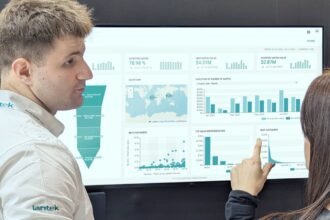
Lantek is a software company we would make time for because KAI places AI inside the everyday quotation workflow. Lantek’s current EuroBLECH press release introduces v46: Further and identifies KAI support for analysing manufacturing information, interpreting design data and automating decisions within quotation preparation.
The workflow includes increasingly complex manufacturing routes, resources and costing criteria, then connects an accepted quotation with the wider software portfolio. Buyers should look at an awkward RFQ rather than a prepared clean file: inconsistent drawings, assemblies and missing production information reveal where the AI saves work and where an estimator remains essential.
Libellula | Hall 11, Stand C34
LIA integrated into the sheet metal software workflow.
We have picked out Libellula because LIA brings a named AI initiative into its existing sheet metal software portfolio. The programme brings AI into its software ecosystem, alongside tools for cutting, quoting, bending and shop-floor coordination.
The company’s AI material describes assistance with recognising and classifying parts and assemblies and handling production information. Visitors should ask which LIA functions are shipping in the version being demonstrated, and which remain previews. The commercial issue is whether information can move from the customer’s design to a usable manufacturing workflow with less checking and re-entry.
WiCAM | Hall 11, Stand J135
An AI Copilot for turning enquiries into calculation data.
WiCAM is on our recommended route because its AI Copilot addresses the frustrating job of getting usable data out of incoming enquiries. It interprets information in customer enquiries and converts it into structured inputs for calculation, helping reduce manual entry and generate CAD information.
The wider display connects PNCalculate with PN4000, nesting and PNBend. The AI evaluation should focus first on how accurately an enquiry becomes the required structured data, then on how the costing and programming tools use it. A traceable correction is valuable when a drawing or customer message is incomplete.
WSoptics | Hall 11, Stand A111
Costonaut and BUZZ for enquiry-to-quotation work.
We like the practical focus of WSoptics’ Costonaut and BUZZ tools, which connect customer enquiries to the quotation process. The BUZZ agent prepares enquiries received through email, uploads or a website for calculation in WSi, then supports quotation creation and transfer of an accepted order into ERP.
The practical test covers the whole chain. Extracting an enquiry is useful only if quantities, materials and required operations reach the calculation correctly. Buyers should inspect the source behind each extracted value and the approval point before a commercial quotation or order is committed.
three91 / MesserSoft | Hall 27, Stand M155
AI reads the RFQ across email, CAD and documents.
We have included three91 because it tackles the problem of quotation information scattered across emails, PDFs and drawings. Its official listing stresses traceability back to the original files. The related three91:shape service supplies expert support for drawings and designs that still require preparation.
The platform is listed in Hall 27, Stand M155. Messer Cutting Systems has a separate location in Hall 13, Stand B128; these addresses should not be interchanged. Visitors should ask how incomplete or conflicting RFQ data is exposed and how the calculated price is reviewed before it goes to the customer.
Vanadio | Hall 17, Stand H51
Metal-industry sales AI connected to stock and ERP.
Vanadio caught our attention by applying AI to the sales and order processes of metal suppliers. Its official show objective promises a live enquiry-to-priced-quote workflow.
The offer is particularly relevant to metal suppliers and service centres where incoming requests arrive in inconsistent formats. The evaluation should include grade and specification matching, available stock, margin rules and the human approval point. A fast response must still refer to the correct material and a deliverable quantity.
Epifor MES | Hall 12, Stand H87
Agentic AI answering from live production data.
We have selected Epifor because its agentic AI is designed to answer production questions using live factory data. Its agents answer production questions using live MES information, the manufacturer’s planning rules and its terminology. The system complements ERP with order tracking, actual work times and traceability.
The useful demonstration starts with an operational question: where an order is, what is holding it up or when it can move to its next operation. Buyers should ask to see the underlying records and distinguish information retrieval from planning recommendations or actions. Accurate shop-floor data remains essential to a dependable answer.
Controls, maintenance and industrial AI
Siemens | Hall 27, Stand F41
Generative AI engineering and Industrial Edge.
Siemens is an essential stop on our route because its AI tools connect to established engineering and industrial-edge systems. Its directory product list names Eigen Engineering Agent, connected to TIA Portal to reduce repetitive engineering work.
This offer addresses machine builders and production engineering teams. Visitors should compare a real engineering task with their current workflow, then examine the checking and validation needed before generated work reaches a controller. Industrial Edge applications should be assessed separately for data requirements, deployment and operating responsibility.
Beckhoff | Hall 27, Stand D89
Machine learning within the control platform.
We have included Beckhoff because its TwinCAT platform gives machine builders practical tools for running machine learning. The company describes execution in the runtime, locally or remotely, with optional GPU acceleration.
Its show material also covers system-integrated vision and no-code model preparation with Machine Learning Creator. Applications include quality inspection, preventive maintenance and optimisation of material or energy use. OEMs should examine timing, model deployment and the management of a revised model alongside the machine software.
SARESMIRAMONDI | Hall 27, Stand H103
Machine learning for process monitoring and maintenance.
We have picked out SARESMIRAMONDI for its machine-learning approach to process anomalies and maintenance. It is intended to support predictive maintenance and process optimisation.
The company also describes machine learning within robotic handling concepts. For buyers, the central issue is how an anomaly becomes a useful maintenance or production action. Ask for the monitored variables, the baseline learning period and a case where an alert prevented a stoppage or revealed a process change.
EMG Automation | Hall 17, Stand C94
iCASS process optimisation for strip production.
EMG makes our list because its iCASS offering brings AI into the specific demands of strip-processing lines. It appears alongside strip-width and hole detection with iCAM and coating measurement with SOLID.
The AI application is process optimisation, while the measurement systems supply a wider quality-control context. Strip processors should ask which variables iCASS evaluates, the output it produces and whether recommendations remain advisory or feed a control process. The distinction is essential when evaluating an installation on an existing production line.
Make time for the NextGen Technology Stage
We also recommend making time for the NextGen Technology Stage in Hall 27. Its programme on AI, connected production and manufacturing challenges should put the technologies we have selected into a wider factory context. Check the current session programme when building a visit schedule.
EuroBLECH 2026 AI exhibitors: frequently asked questions
When and where is EuroBLECH 2026?
EuroBLECH takes place from 20 to 23 October 2026 at the Hanover Fairground in Germany. The official opening hours are 09:00–18:00 on the first three days and 09:00–17:00 on Friday, in local time.
Where can visitors find InspecVision?
You can find InspecVision in Hall 11, Stand B119. Its current show information identifies the AI-powered GAV Guidance & Verification system.
Will every AI feature be demonstrated live at EuroBLECH?
We have selected suppliers with identifiable AI products, but not every feature will necessarily be demonstrated live. We recommend checking the exhibitor’s programme if there is a particular machine or software function you want to see working.
Can visitors compare AI systems using their own parts or drawings?
Ask the exhibitor in advance whether it can accept a part, CAD model, RFQ, defect sample or anonymised production record. A representative example helps reveal preparation requirements and how the system handles a changed or uncertain case.
Where should stand numbers be checked before travelling?
Use the current official EuroBLECH exhibitor directory and the supplier’s own show announcement. This preview records the listings checked on 14 October 2026; exhibitor arrangements and demonstration schedules can change.
Further reading and official sources
- InspecVision GAV: in-process guidance and verification
- TCI Cutting: the Smart Sorting workflow
- Lantek KAI and v46 ahead of EuroBLECH
- How AI is used in sheet metal fabrication
- Official EuroBLECH 2026 exhibitor directory
- Official show programme
- EuroBLECH press resources and official photographs
Research checked 14 October 2026. Manufacturer descriptions establish the stated offers and claims; we have not independently benchmarked their performance. The featured photograph shows EuroBLECH 2024 and is supplied through the official EuroBLECH press resources.