European manufacturing is entering a critical phase where knowledge loss, workforce shortages, and rising production complexity are colliding. At Hannover Messe, German Edge Cloud is presenting a solution designed to address this challenge head on.
We spoke with Dieter Meuser, CEO of German Edge Cloud, about the company’s Digital Industrial Engineer (DIE) and how it fits into the next phase of industrial AI adoption.
MTN: At Hannover Messe, you are presenting the “Digital Industrial Engineer.” In simple terms, what problem in modern manufacturing does this AI system solve that traditional digitalisation initiatives have struggled to address?
Dieter Meuser:
Industrial engineers are crucial to the stability of modern manufacturing. They develop work and test concepts, evaluate product changes, analyze disruptions, and ensure stable processes. Their experience helps avoid errors, spot deviations early, and maintain high standards even in highly variant production.
But this knowledge-driven role is under pressure. Many experienced engineers will retire soon, while young talent isn’t replacing them fast enough. Much of this expertise built on years of undocumented decision-making is at risk of being lost. In high-variant environments, this directly threatens process stability, quality, and responsiveness.
At the same time, we’re seeing more highly qualified foreign engineers enter the European market, but they face language and documentation barriers. The Digital Industrial Engineer gives them an AI assistant that makes technical terms, processes, and historical documents instantly accessible. They can contribute productively from day one.
DIE systematically captures this knowledge where it originates in real production and planning situations. Through expert interviews, disruption analyses, ramp-ups, product changes, and existing documents like work plans, FMEAs, or test concepts, we capture decision logic, failure patterns, cause chains, and proven fixes.
This creates standardized, scalable knowledge modules linked to actual contexts such as product variants, technologies, and revision levels. The result is a digital production memory with transparent relationships and reproducible decisions.
The Digital Industrial Engineer is optionally available in our ONCITE Digital Production System.
But let’s now turn to Germany’s digitalisation challenge: over 90 per cent of industrial companies are SMEs. In the manufacturing sector, a good two-thirds do not have a comprehensive digitalisation strategy.
That is why we have developed the ONCITE Digital Production System (DPS). ONCITE DPS can complement traditional MES systems, take over a large part of typical MES functions, and integrate seamlessly into existing MES landscapes. We can create a 3D digital representation of production and offer secure data exchange with other companies or data ecosystems such as Catena-X or Manufacturing X. The DPS also facilitates access to industrial AI clouds. This ensures that the data owner always retains full data sovereignty. The DIE is an optional feature of ONCITE DPS.
MTN: European manufacturing is facing both a demographic shift and increasing production complexity. How does the Digital Industrial Engineer practically capture and structure experiential knowledge before it disappears from the factory floor?
Dieter Meuser:
Knowledge capture and structuring begin with preparation. The great2know team works closely with stakeholders to analyze targeted knowledge domains and identify employees with crucial expertise. Using an AI-powered app, they create technical questions to guide structured interviews with these knowledge holders.
Responses can be written, spoken, recorded as video, or extracted from existing documentation.
AI then systematizes, structures, enriches, and contextualizes these inputs. Knowledge experts remain involved throughout the process, monitoring workflows and performing quality checks. This human-in-the-loop approach ensures reliable and company-specific results while the AI continues learning.
With DIE support, industrial engineers become more productive because they can monitor more processes during their shift.
MTN: You describe the solution as operating at maturity level 3. What does that mean in real industrial terms, and how do you build trust in AI-supported decision-making among experienced engineers?
Dieter Meuser:
A maturity level of 3 means AI is fully embedded in day-to-day engineering and production operations. The system captures experiential knowledge from real planning and production situations, links it with technical documentation and historical data, and delivers context-specific recommendations.
Transparency is essential. Employees can see exactly which documents, historical cases, or boundary conditions underpin the AI’s suggestion. They receive clear explanations rather than black-box outputs.
MTN: Manufacturers are under pressure to justify AI investments. Where do you see the most immediate measurable ROI from the Digital Industrial Engineer?
Dieter Meuser:
Companies see measurable ROI quickly once they begin digitalization because inefficiencies become visible.
For example, ONCITE DPS Track and Trace reveals the conditions under which defective products were made. This allows parameter adjustments that reduce material loss. Energy consumption can also be optimized once data is properly understood.
The Digital Industrial Engineer shows ROI when expertise is unavailable or when manual analysis would take too long. In situations where machines are idle and external specialists are not available, the AI solution pays for itself almost instantly.
Engineers are a significant cost factor. DIE enables them to work more effectively, reducing personnel costs while addressing the skilled worker shortage.
MTN: Many factories already collect large volumes of data. What differentiates the Digital Industrial Engineer from a conventional analytics platform?
Dieter Meuser:
Traditional analytics platforms visualize data but do not explain why something is happening or how to fix it.
The Digital Industrial Engineer combines real-time production data with digitized human expertise. It captures implicit knowledge such as fault patterns and proven solutions and links it to specific product variants and process conditions.
It delivers actionable recommendations and uses agent-based AI that can reason, not only report. It also helps overcome language barriers for international teams.
MTN: Looking ahead five years, how will AI systems like the Digital Industrial Engineer reshape the role of the industrial engineer?
Dieter Meuser:
The role will evolve but not disappear. Creativity, technical judgment, and solution-oriented thinking remain essential.
Industrial engineers will increasingly use AI tools like DIE, which will change how they approach problems. The human in the loop remains critical because industrial AI cannot fully validate its own outputs.
I do not expect industrial engineers to be replaced. Technology will support them, not replace them.
MTN: What are the most important AI trends shaping European manufacturing today, and where does DIE fit?
Dieter Meuser:
Key trends include the rise of smart factories driven by IoT, digital twins, and agentic AI. Predictive maintenance and autonomous logistics are becoming standard.
Material flow is emerging as a major bottleneck, and AI is being used to optimize it. Seamless data integration across systems is essential.
Digitalization remains the most critical factor. Many SMEs risk falling behind, while a smaller portion is ready for AI adoption.
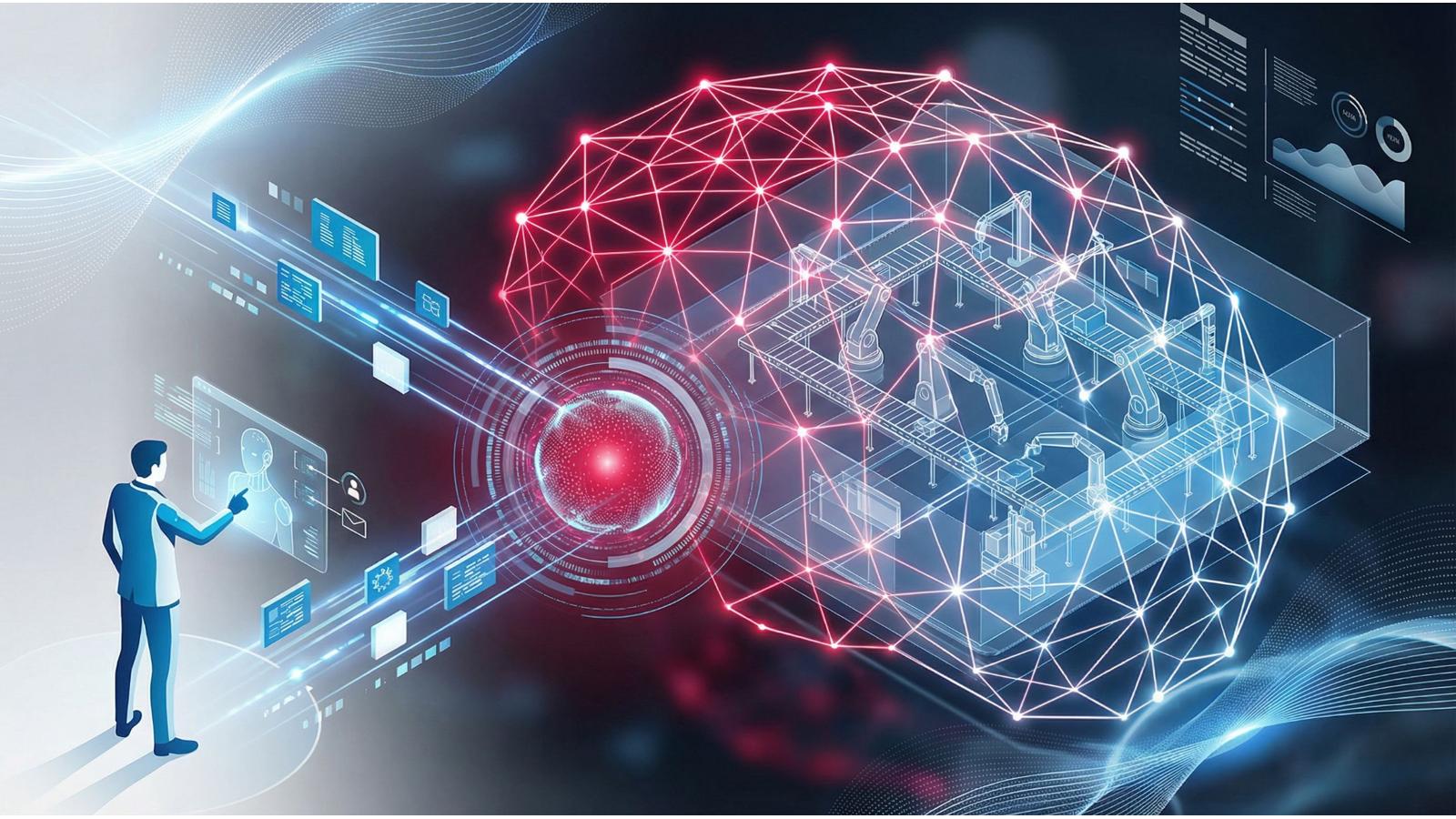
ONCITE DPS acts as a data hub that connects fragmented systems into a unified model. The Digital Industrial Engineer builds on this by capturing human expertise and turning it into a scalable knowledge system.
Rather than focusing on fully autonomous factories, GEC focuses on the concept of a worry-free factory where AI assists and humans remain in control.
MTN: How important is sovereign, standards-based data integration for enabling AI assistants in production?
Dieter Meuser:
Initiatives like Catena-X enable secure and standardized data exchange across the value chain.
They support resilience, sustainability, and cross-company AI applications while maintaining data sovereignty.
ONCITE DPS is fully Catena-X certified and enables both vertical and horizontal data integration while ensuring that data owners remain in control.
MTN: Many AI projects remain pilots. What makes this solution scalable across plants and teams?
Dieter Meuser:
The Digital Industrial Engineer is designed as an industrial-grade solution that delivers ROI from day one.
It scales because it is built as a flexible framework. ONCITE DPS structures production data, while the great2know layer captures experiential knowledge. Additional tools enable fast process integration.
This creates a scalable system that can grow from a pilot to a global platform.
MTN: What developments can manufacturers expect next from German Edge Cloud?
Dieter Meuser:
We will continue expanding ONCITE DPS with features that deliver visible value quickly.
A key question remains whether SMEs will fully embrace digitalization. With secure infrastructure like Deutsche Telekom Industrial AI Cloud, concerns around data sovereignty are being addressed.
The future depends on whether companies choose to act. I believe Europe can remain a strong industrial region if we move forward together.
MTN Analysis
The German Edge Cloud Digital Industrial Engineer 2026 positions itself in a very specific gap that most AI vendors are currently missing.
Most industrial AI solutions focus on machine data, dashboards, or predictive models. What GEC is doing differently is targeting human knowledge as the core bottleneck.
Three key takeaways stand out:
- Knowledge loss is becoming a measurable production risk
Retirement of experienced engineers is no longer a future issue. It is already impacting process stability. - AI adoption in SMEs is still blocked by digital readiness
The ONCITE DPS layer is as important as the AI itself because it solves the data foundation problem first. - Agent-based AI is moving from theory to production
The shift from dashboards to reasoning systems is where real operational value begins.
The strategy is clear. GEC is not chasing fully autonomous factories. It is building systems that augment engineers in high-variance environments, which is where most European manufacturing actually operates. For a broader view of how AI is being applied across factories, see our breakdown of what industrial AI means for manufacturing.
FAQ: German Edge Cloud Digital Industrial Engineer
What is the Digital Industrial Engineer?
It is an AI system that captures and structures human engineering knowledge and combines it with production data to support decision-making.
How is it different from traditional analytics tools?
It explains problems and recommends actions rather than only visualizing data.
Where does ROI come from?
Reduced downtime, faster problem resolution, improved process stability, and lower reliance on external expertise.
Is this replacing engineers?
No. The system is designed to support engineers, not replace them. Human validation remains essential.
Why is ONCITE DPS important?
It provides the digital infrastructure required to make AI usable in real factory environments, especially for SMEs.