AMADA and Hitachi have completed proof-of-concept trials using agentic AI in sheet metal manufacturing to support production planning, machine utilisation, troubleshooting and maintenance recovery. The next step is to implement the technology at customer factories and develop physical AI capable of connecting software decisions with machinery and robotic systems.
For sheet metal manufacturers, the significance of this collaboration lies in the potential to move beyond conventional machine monitoring towards AI systems that understand production conditions, recommend corrective actions and eventually interact with physical equipment.
The announcement, made on 26 November 2026, brings together AMADA’s manufacturing expertise and connected-machine data with Hitachi’s AI agent development, industrial data modelling and engineering capabilities.
However, the companies have not yet disclosed a commercial deployment timetable or quantified customer performance results.
4 practical applications of agentic AI in sheet metal manufacturing
The proof-of-concept work focused on four areas where AI could reduce the reliance on manual decision-making and specialist knowledge.
- Production planning: Supporting adjustments to production schedules in response to unexpected changes in delivery deadlines.
- Machine utilisation: Recommending more efficient ways to use manufacturing equipment and software.
- Troubleshooting: Identifying possible causes of machine faults and recommending diagnostic procedures and corrective actions.
- Maintenance recovery: Using accumulated technical knowledge to suggest recovery procedures, including for complex faults without directly comparable historical cases.
According to the joint AMADA and Hitachi announcement, the companies successfully evaluated these capabilities during the proof-of-concept phase. However, neither company has published figures for downtime reduction, productivity improvements or maintenance cost savings.
How agentic AI in sheet metal manufacturing uses connected machine data
AMADA’s existing connected-machine infrastructure provides an important foundation for deploying agentic AI in sheet metal manufacturing.
The manufacturer reports that more than 10,000 machines worldwide are now connected to its V-factory IoT solution, providing an established foundation for developing data-driven manufacturing services.
While conventional monitoring systems provide information about equipment status and performance, AI agents introduce the possibility of using that information alongside manufacturing knowledge to recommend operational decisions.
Hitachi is contributing its industrial AI expertise through HMAX Industry, alongside the development of structured knowledge databases known as integrated ontologies.
These databases are designed to represent relationships between manufacturing processes, equipment and technical knowledge in a format that AI systems can use.
The involvement of Hitachi’s Forward Deployed Engineers (FDEs) will also support the identification of manufacturing problems, AI implementation and ongoing operation.
For manufacturers, this raises an important question: how much existing production knowledge can be transferred into an AI system without requiring extensive manual preparation?
From AI agents to physical AI
AMADA and Hitachi intend to extend their collaboration beyond software-based recommendations.
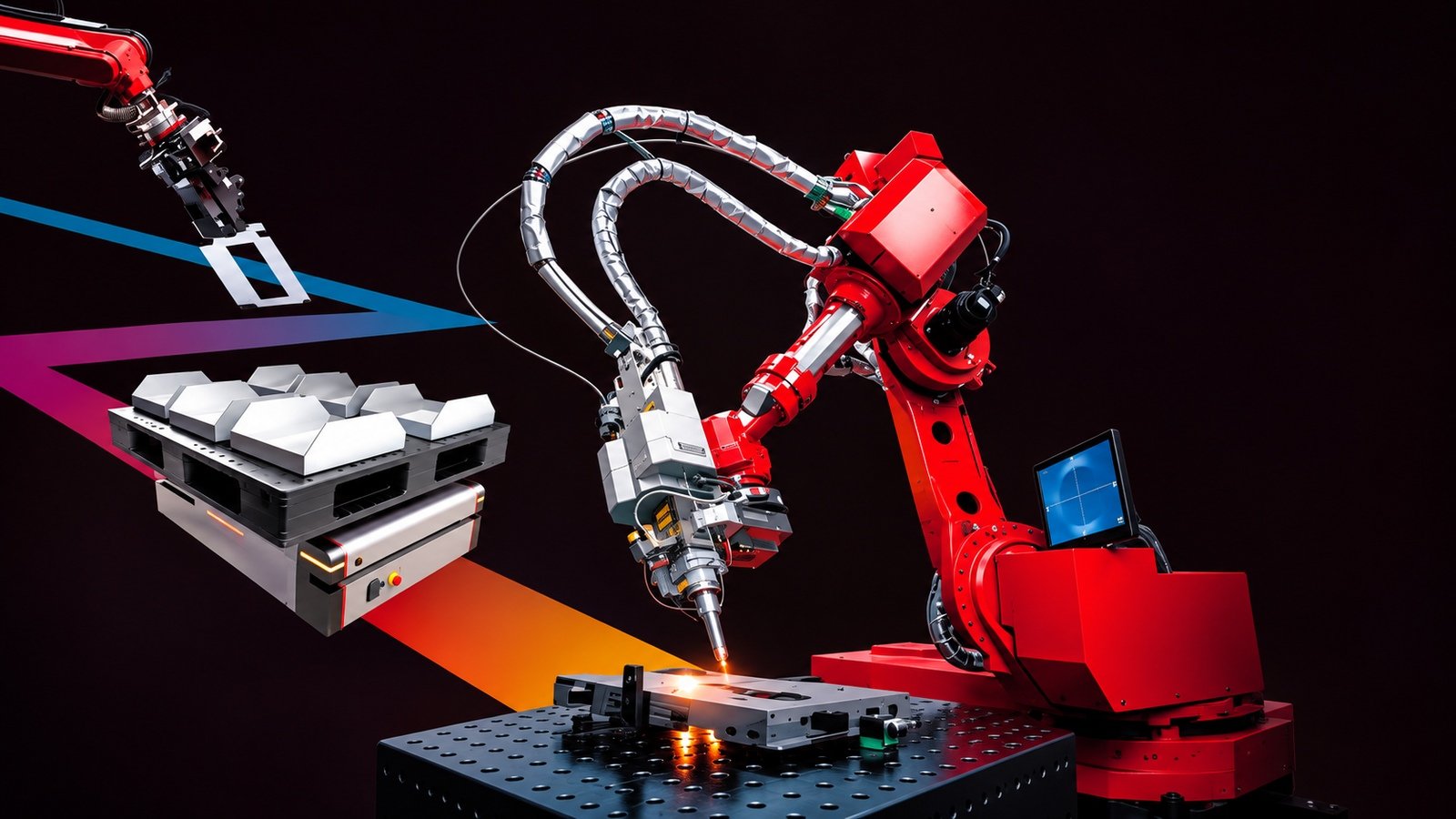
Their longer-term objective is to establish a system in which AI agents analyse production schedules, equipment conditions and ongoing operations, while physical AI translates those decisions into actions performed by manufacturing equipment and robots.
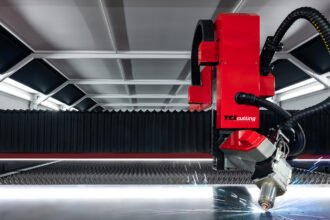
In a sheet metal factory, this could eventually support closer coordination between laser cutting, bending, material handling and automated production systems.
These are potential applications rather than confirmed commercial capabilities.
AMADA has also introduced its MIRAI factory demonstration area at the AMADA Global Innovation Center (AGIC), presenting its vision for next-generation manufacturing where people and machines work collaboratively.
The distinction between recommending an action and autonomously executing it will be particularly important when evaluating industrial safety, production reliability and operator responsibility.
Why it matters for sheet metal manufacturers
High-mix, low-volume production makes factory planning particularly challenging. A machine breakdown, urgent customer order or material shortage can disrupt several downstream processes.
The opportunity for agentic AI in sheet metal manufacturing is to help production teams respond to these changes without manually reassessing every affected operation.
Maintenance is another area where AI could deliver practical value. Experienced service engineers often hold years of technical knowledge that is difficult to transfer to less experienced employees.
Making that knowledge accessible through AI agents could support troubleshooting, skills transfer and faster maintenance decisions.
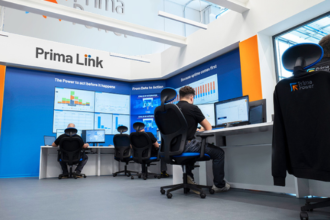
We are already seeing related developments elsewhere in the industry, including Prima Power’s digital services for machine monitoring and maintenance and Epifor’s application of agentic AI to factory planning.
What distinguishes the AMADA and Hitachi initiative is its ambition to connect production decisions, machine service and physical automation within a broader factory system.
MTN Analysis
The most commercially significant aspect of this announcement may not be physical AI itself, but the combination of manufacturing equipment, accumulated service knowledge and AI-assisted decision-making.
For machine tool manufacturers, this could create opportunities to differentiate their offering through intelligent lifecycle services rather than equipment performance alone.
However, access to machine data does not automatically translate into better production decisions.
Before investing, manufacturers will need evidence of compatibility with existing machines, ERP and MES platforms, implementation costs, diagnostic accuracy and the level of human oversight required.
We would particularly like to see customer results demonstrating improvements in machine utilisation, mean time to repair (MTTR), schedule adherence and overall equipment effectiveness (OEE).
AMADA and Hitachi have completed an important development stage, but the real test for agentic AI in sheet metal manufacturing will be its ability to deliver measurable, repeatable improvements under everyday production conditions.
FAQ
Is AMADA’s new agentic AI technology commercially available?
The companies have completed proof-of-concept work and intend to implement the technology at selected customer factories. A commercial release date and pricing have not been disclosed.
Can the AI agents work with existing sheet metal machinery?
AMADA intends to build on its existing manufacturing expertise and connected-machine infrastructure. Compatibility with specific machine models, older equipment and third-party machinery has not been confirmed.
Does the technology autonomously control manufacturing equipment?
The completed trials focused on AI-assisted decision-making and maintenance support. Autonomous equipment and robot control through physical AI remains a development objective.
Has AMADA demonstrated measurable productivity improvements?
The partners report successful proof-of-concept evaluations, but quantified customer productivity, downtime and ROI results have not been published.
Further Reading
- Prima Power Digital Services: 3 Powerful Tools for Smarter Sheet Metal Production
- Epifor MES AI: 5 Powerful Ways Agentic AI Could Change Factory Planning
- FABTECH 2026: Your Complete Guide to AI Exhibitors
- EuroBLECH: Your Ultimate Guide to AI Exhibitors
- Hitachi: Official AMADA and Hitachi Collaboration Announcement