By Rahul Garg, VP for Industrial Machinery Vertical Software Strategy, Siemens Digital Industries Software
AI can augment existing knowledge, unlocking productivity and efficiency gains when deployed correctly (Image credit: Siemens)
Manufacturers, especially machine builders, can no longer ignore AI as what was once thought to be visionary is here and rapidly evolving. AI has the potential to reward machine builders and manufacturers alike with gains in productivity, efficiency and even automation. Despite the tangible rewards of AI integration, however, it can be easy to encounter stumbling blocks that prevent companies from reaching their full potential. This is why it is critical that manufacturers strategically implement AI instead of applying it indiscriminately to all functions and workflows.
Businesses will best see the advantages of AI when they take traditional, generative and agentic into their own hands and work to tailor it to their workflows and goals. Factories that develop a roadmap for how they will deploy AI ensure that their projects align with their needs, enabling them to improve their chances of successfully implementing AI and positioning them for a future lead by AI.
From crawling to flying
Expediting AI integration starts with understanding where an organization is at in its digital transformation journey, so that the organization can deploy AI to scale. This process of becoming digitally mature is distinct for each business. Approaching AI transformation while acknowledging specific problem areas sets the foundation for businesses to tackle problems that will become more and more complex in the future.
Not to mention, jumping immediately into integrating more advanced solutions like LLMs and agentic AI prematurely may lead to unforeseen disruptions. For this reason, companies should start simple and gradually introduce more complex AI functionalities. Straightforward tools such as command prediction during the product or part design process, for example, can reduce repetitive tasks for engineers and designers. While companies get a feel for their distinct AI needs and determine what is and is not working. Then companies can start forging their unique path toward digital transformation.
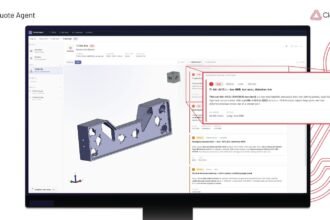
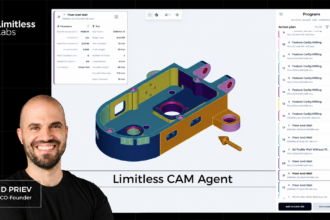
AI unshackles data for the user, improving design and engineering off the machine (Image credit: Siemens)
Once the organization is comfortable with less demanding solutions and has a good grasp of what its specific AI future looks like, it can begin introducing more advanced features like AI-enhanced topology optimization for part and component design or other tools more catered to its needs. This gradual ramp up enables businesses to identify best practices and utilize historical data to move full steam ahead with their AI implementation.
At this point, a company can begin training its own AI models to enhance and optimize its processes. With these customized solutions designed to meet the company’s own specific challenges, machine builders can fully integrate generative AI and agents into their processes to create new engineering and manufacturing content and even automate complex workflows.
Empower everyone with AI
Digital transformation will not look the same for each company or even across individual departments and even individual users in one company. And they shouldn’t, which is why it is essential that businesses consider who will be using each solution. To empower everyone regardless of AI training and knowledge within the organization to use AI to its full advantage, organizations must deploy solutions that work for every position. If all AI skill levels can reap the benefits of data-driven manufacturing, businesses can proficiently use their data to solve issues; especially those unique to its operations.
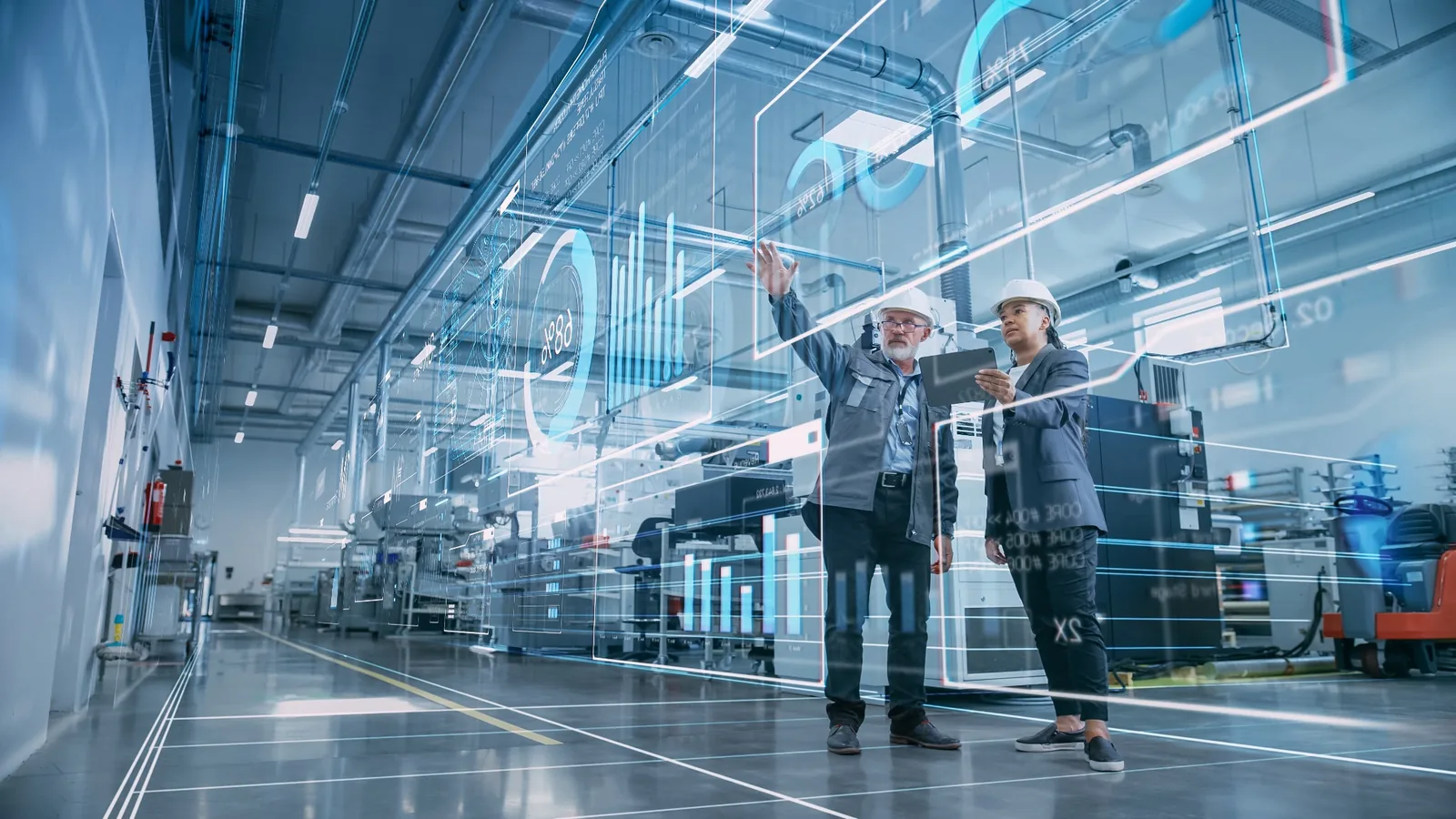
AI unlocks data for engineers and designers, helping them build better machines quicker (Image credit: Gorodenkoff/stock.adobe.com)
Solutions out right now such as condition monitoring and predictive maintenance are already available in the market make machine data more easily digestible without the need for formal training in app development or programming. Designed to be easy and intuitive, these tools can help provide transparency into equipment status and key performance indicators for frontline employees.
Meanwhile, design engineers and production engineers with a deeper understanding of machine programming and production processes can utilize AI to configure tailor-made tools for quality prediction and process optimization. They can also interact with copilots and other LLMs using natural language to complete tasks such as command searching or asking design-related questions.
Due to the versatility of AI-infused tools, both large businesses and SMBs can leverage them very effectively. SMBs benefit from the low barrier to entry due to its software as service model, eliminating the need for heavy on-site infrastructure. Meanwhile, large enterprises can leverage the scalability and easily integrate the capabilities into their existing systems. In all, it is crucial to leverage AI solutions that can support a wide variety of workers and businesses at any point in their digital maturity journey.
Tailor-made success
The future is clear: companies will be using intelligent tools to drive efficiency, innovation and transformation across every aspect of engineering. More and more companies are ramping up efforts to integrate AI into their everyday processes to keep pace with competitors and partners. And with AI solutions becoming more advanced by the day, companies who have started their digital transformation journeys are already reaping the benefits.
Get a leg up on the competition and avoid common pitfalls by putting AI-powered tools to use in the right places with the right people. AI is not one size fits all, but integrating AI is now easier than ever and it all starts with understanding the organization’s needs.
About the author:
Rahul Garg is Vice President for Industrial Machinery Vertical Software Strategy at Siemens Digital Industries Software.
As a customer-centric leader, one of his great joys is helping simplify complex problems for customers and enabling success by delivering powerful, effective solutions that support small and mid-sized businesses.
Throughout his career having worked at 3 start-ups and now a large enterprise, Rahul has worked closely with SMBs & in technology-led industries to overcome key challenges and drive revenue growth with strategic solutions, smarter services and better business practices.
FAQ
Why does Siemens believe manufacturers need to customize AI solutions?
Siemens argues that businesses will see the greatest benefits when AI is tailored to their own workflows, goals and operational requirements. A clear deployment roadmap can help manufacturers align AI projects with specific business needs.
How should machine builders begin implementing AI?
The article recommends understanding the organisation’s current level of digital maturity and starting with relatively straightforward AI applications before gradually introducing more advanced capabilities.
Should manufacturers immediately deploy LLMs and agentic AI?
The article warns that introducing advanced technologies such as LLMs and agentic AI prematurely may create unforeseen disruption. Siemens recommends starting simple, identifying what works and progressively adding more complex AI functionality.
How can AI support product and component design?
AI can reduce repetitive design work through capabilities such as command prediction. More advanced applications can include AI-enhanced topology optimisation and customised models designed around specific engineering requirements.
What role can predictive maintenance play in industrial AI adoption?
Condition monitoring and predictive maintenance can make machine data easier for employees to understand and provide greater transparency into equipment status and key performance indicators without requiring employees to become application developers or programmers.
How can engineers use AI copilots and LLMs?
Design and production engineers can use copilots and LLMs through natural language for tasks such as searching for commands, answering design-related questions and supporting specialised engineering workflows.
Can small and mid-sized manufacturers benefit from AI?
Yes. The article says SMBs can benefit from the relatively low barrier to entry offered by software-as-a-service models, while larger businesses can take advantage of scalability and integration with existing systems.
What is the main message behind Siemens’ approach to AI solutions?
The central message is that AI should be applied to the right processes and used by the right people. Manufacturers need to understand their own requirements and tailor AI deployment accordingly rather than applying the same approach everywhere.
Further Reading
MachineToolNews.ai: Is 2026 the Rise of the Manufacturing Copilot?
MachineToolNews.ai: Siemens Data Alliance Interview
MachineToolNews.ai: Siemens and IFS Announce Groundbreaking Industrial AI Partnership