Manufacturing AI is moving beyond isolated pilots. The next challenge is connecting data, people and production systems to deliver measurable operational value and make manufacturing AI a reliable part of everyday factory operations.
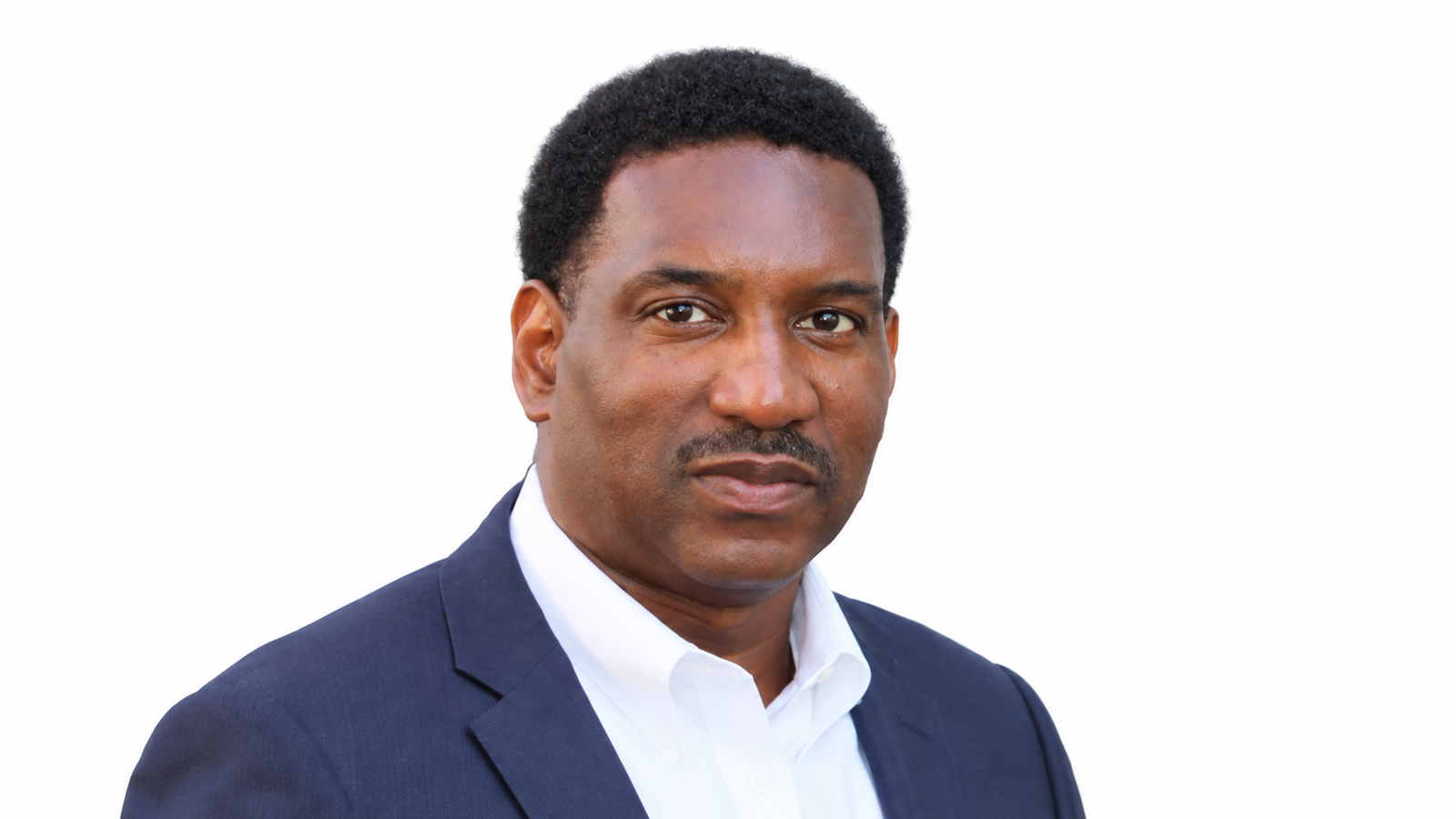
In this MTN interview, Tim Steward, Principal Data Enterprise Architect at Fujitsu, specialising in manufacturing, explains where AI is closest to delivering value, how agentic AI could transform production planning, and why governance and integration matter as much as the technology itself.
For manufacturers, successful manufacturing AI depends on more than model performance. Integration, data quality, governance and clear business outcomes determine whether AI can scale beyond individual use cases.
From vision AI and legacy factory systems to data sovereignty and autonomous decision-making, Steward shares his perspective on what it will take to make AI work in real manufacturing environments.
MTN: Which manufacturing use case is currently closest to delivering repeatable value at scale rather than remaining a pilot?
Tim Steward: The use case that appears closest to broad, repeatable value is operational optimisation, especially where AI helps manufacturers respond faster to variability across production, maintenance, quality and supply chains.
Many manufacturers have already proven that AI can identify defects or build forecasts. The challenge has been connecting those insights to day-to-day operations. What’s changing now is the ability to combine data from multiple systems and continuously adapt recommendations as conditions change.
The most successful deployments aren’t replacing people. They’re helping experienced teams make better decisions faster, particularly in environments facing labour shortages, supply volatility and increasing pressure on productivity.
MTN: Where do you see Fujitsu differentiating in manufacturing AI against hyperscalers and specialist industrial-software vendors: the models themselves, industry data, integration capability, digital twins, or end-to-end transformation?
Tim Steward: I don’t think manufacturing leaders are looking for another AI model. They’re looking for business outcomes.
The differentiator is the ability to combine technology, operational knowledge and implementation expertise. Most manufacturers already have access to powerful AI models. The harder challenge is connecting those models to decades of production data, business processes and operational realities.
The opportunity for companies like Fujitsu is helping organisations orchestrate those pieces together, from data and infrastructure through to operational change. AI creates value when it becomes part of how a business runs, not when it remains a standalone technology project.
MTN: Vision AI is one of Fujitsu’s active development areas. Which factory problems are best suited to the new generation of vision models beyond traditional rule-based inspection?
Tim Steward: Traditional vision systems work well when you’re looking for known defects under controlled conditions. The new generation of vision AI is better at understanding context.
That opens the door to use cases such as identifying process anomalies before a quality issue occurs, monitoring safety conditions in dynamic environments, supporting human-robot collaboration, and recognising subtle patterns that would be difficult to define through rules alone.
I think the most exciting shift is from simple detection to interpretation. Instead of asking, “Is this part defective?” manufacturers can increasingly ask, “What is happening in this production environment, and what should I do next?”
Vision AI is moving closer to becoming an operational adviser rather than simply a camera with analytics.
MTN: How do you see agentic AI changing production planning and supply-chain decisions, especially when an agent must balance cost, capacity, inventory, delivery and disruption risk at the same time?
Tim Steward: Planning has always involved competing priorities. The challenge is that humans can only evaluate so many scenarios at once.
Agentic AI has the potential to continuously model alternatives, evaluate trade-offs and recommend actions based on changing conditions. Rather than running a weekly planning cycle, organisations can move towards near-real-time decision support.
I don’t see agents replacing planners. I see them helping planners evaluate thousands of possible outcomes much faster than traditional approaches. The role of the human shifts from gathering information to setting priorities, validating recommendations and making strategic decisions.
Agentic AI can shorten the distance between detecting a disruption and producing a workable response. When a supplier misses a delivery, an agent could assemble the relevant inventory, capacity, maintenance and customer-order information, then coordinate alternative plans.
The future isn’t autonomous factories. It’s factories where people are supported by systems that can reason across far more variables than any team could manage manually.
MTN: Manufacturing customers often have decades of legacy OT and IT. What architecture lets them introduce AI without replacing the systems that already run the plant?
Tim Steward: The reality is that most manufacturers can’t pause operations and start over.
The most practical approach is a layered architecture where AI sits alongside existing systems rather than replacing them. Manufacturers should be able to connect data from ERP, MES, SCADA, historians, quality systems and supply-chain platforms while preserving the investments they’ve already made.
PostgreSQL can serve as an open-source foundation for operational context, application state and decision records, alongside historians and specialist analytical stores. AI services then access approved information through controlled interfaces.
This allows organisations to modernise incrementally. They can introduce AI capabilities where they create value while maintaining the reliability and stability that production environments demand.
In manufacturing, evolution usually beats revolution.
MTN: What controls are needed before an AI agent can move from recommending a manufacturing decision to taking an operational action that affects schedules, equipment or material flow?
Tim Steward: Trust is earned in stages.
The first step is transparency. Operators need to understand why a recommendation was made. The second is governance, including approval workflows, audit trails and clear accountability. The third is proving reliability over time in controlled environments.
I expect most organisations will adopt a graduated approach. AI agents will recommend first, then execute limited actions under supervision, and eventually handle predefined operational scenarios autonomously.
The more consequential the decision, the more important human oversight becomes. Manufacturers are unlikely to hand complete control of production to an agent any time soon, nor should they.
Every action should leave a traceable record of inputs, model version, policy checks, approvals and outcome. Database integrity supports that accountability. Open source can improve inspectability, but operational trust comes from validation, maintained software and disciplined governance.
MTN: For customers with sensitive process and product data, how are you balancing cloud AI, edge deployment, data sovereignty and cybersecurity?
Tim Steward: Manufacturers increasingly want flexibility rather than a single deployment model.
Some workloads benefit from cloud-scale innovation. Others require processing close to equipment, strict data residency controls or protection of proprietary intellectual property.
The answer is rarely cloud-only or edge-only. It’s about deploying AI where it makes the most sense while maintaining governance, security and sovereignty requirements.
As AI adoption accelerates, trust becomes just as important as accuracy. Organisations need confidence not only in what the AI can do, but also in where their data resides, who can access it and how decisions are being made.
MTN: What would you like a manufacturer to be able to do with Fujitsu’s industrial AI in the next two years that is difficult or impossible for them to do reliably today?
Tim Steward: I’d like to see manufacturers move from reacting to events to orchestrating outcomes.
Today, information is often fragmented across departments, systems and suppliers. The real opportunity is creating environments where AI can help connect those pieces, anticipate disruptions and coordinate responses across the entire operation.
If we’re successful, manufacturers won’t just know what happened yesterday. They’ll have the ability to continuously evaluate what’s happening now, predict what could happen next and act with greater confidence.
Ultimately, the goal isn’t smarter algorithms. It’s creating more resilient, agile and sustainable manufacturing organisations that can thrive in an increasingly complex world.
MTN Analysis: Manufacturing AI’s Real Test Is Operational Integration
Manufacturing AI has no shortage of promising applications. Vision systems can identify defects, predictive models can flag potential problems, and AI agents can evaluate complex planning scenarios. The harder question is whether these capabilities can work reliably across the systems that manufacturers already depend on.
Ultimately, manufacturing AI will prove its value through reliable integration, better operational decisions and measurable improvements across the factory.
Steward’s answers point to three priorities.
First, connect insight to action. AI that identifies a problem but leaves teams to piece together information from disconnected systems has limited operational reach. The real opportunity is connecting production, maintenance, quality and supply-chain data so manufacturers can respond faster and make better-informed decisions.
Second, modernise without disrupting production. Manufacturers cannot simply replace decades of operational technology and enterprise systems to accommodate AI. Layered architectures and controlled access to existing data offer a more practical route, allowing businesses to introduce new capabilities incrementally.
Third, build trust before expanding autonomy. Giving AI agents responsibility for production schedules, equipment or material flows requires more than accurate recommendations. Manufacturers need transparency, testing, approval processes, traceable decisions and clear accountability. Human oversight should evolve alongside demonstrated reliability.
The important distinction is between deploying AI and making it part of everyday manufacturing operations. The former can produce an impressive demonstration. The latter requires integration, governance and a clear connection to business outcomes.
For manufacturers assessing their next AI investment, the question is not simply what the technology can do. It is how reliably it can help people make and execute better decisions on the factory floor.
The future of manufacturing AI will depend on how effectively manufacturers connect existing systems, build trust in automated decisions and turn AI insights into measurable operational improvements.
Further Reading
- Hexagon’s Manufacturing Report Highlights the AI Data Gap – Why connecting manufacturing data across systems remains a key challenge for businesses looking to scale AI.
- Agentic AI in Manufacturing: Bosch on the Future of Smart Factories – How AI agents could support smarter factory operations and production decisions.
- Fujitsu: Smart Factory – Fujitsu’s approach to connected manufacturing, digital transformation and smarter factory operations.
- Fujitsu: Agentic AI – Fujitsu’s perspective on AI agents and autonomous decision-making.
- PostgreSQL: About – Learn more about the open-source database technology discussed by Steward in the interview.




-330x220.jpeg)